Introduction
Your car is pretty good at telling you when something’s wrong — if you know what to listen, look, and feel for. The trouble is, most of us tend to ignore the early warning signs, hoping they’ll go away on their own. They rarely do. And what starts as a minor issue can quickly become a much more expensive repair.
Whether you’re driving the A523 into Macclesfield town centre, commuting across to Wilmslow, or heading down to Congleton, catching a problem early can be the difference between a quick garage visit and a full engine rebuild.
In this guide, we’ll cover the most common signs that your car needs professional attention — and explain why you should never put them off.
Warning Lights You Should Never Ignore
Modern cars are packed with sensors designed to flag problems before they become serious. If a warning light comes on, your car is actively asking for help. Here are the ones that demand immediate attention.
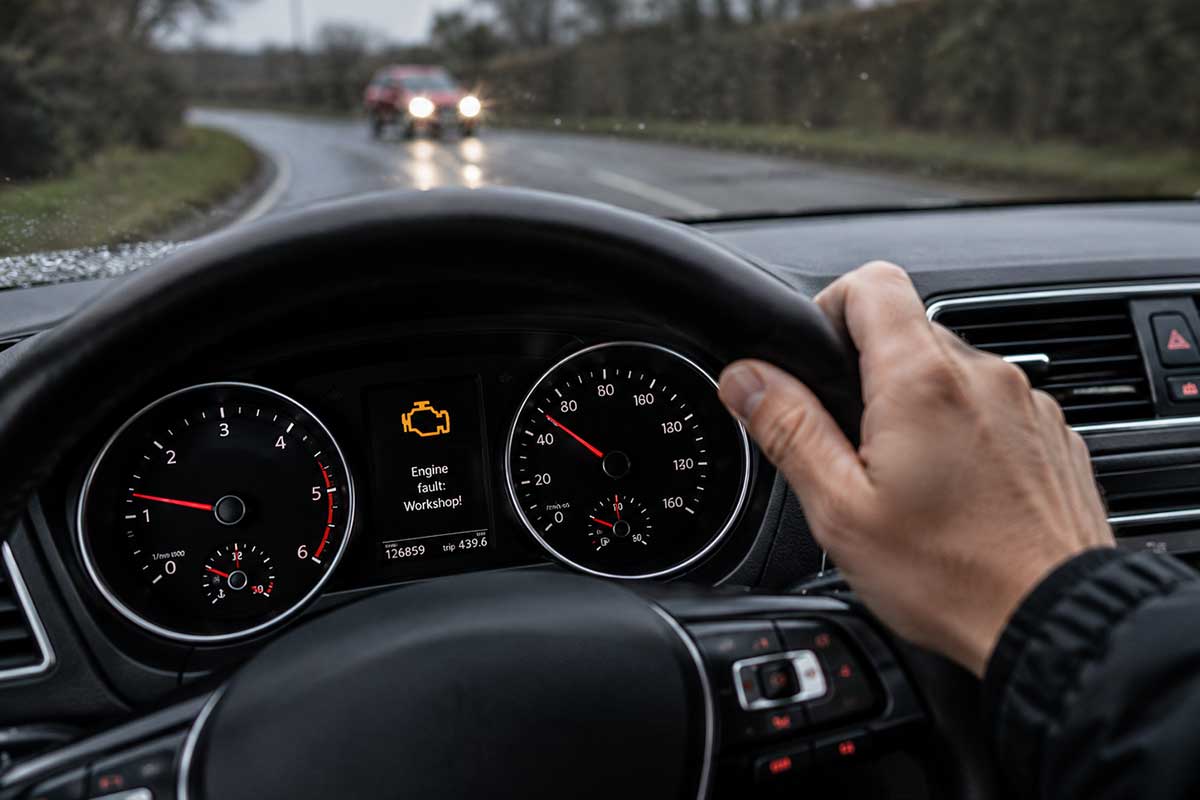
Engine Management Light (EML)
The engine management light — usually an orange engine symbol — can mean anything from a loose fuel cap to a failing catalytic converter. Don’t assume it’s nothing. Get it diagnosed with a diagnostic scan at a trusted garage in Macclesfield as soon as possible.
Oil Pressure Warning Light
This is one of the most urgent lights on your dashboard. If the oil pressure warning comes on while you’re driving, pull over safely and switch off the engine immediately. Continuing to drive can cause catastrophic engine damage within minutes.
Battery Warning Light
A battery light that stays on while driving usually points to a failing alternator rather than the battery itself. If this comes on, your car may cut out without warning — get it checked the same day.
Brake Warning Light
If your brake warning light illuminates and the handbrake is fully released, your brake fluid may be critically low — or your brake pads may have worn through. Neither situation is safe to ignore.
Strange Noises That Point to a Problem
Unusual sounds from your car are one of the clearest signs something needs attention. Here’s what different noises can mean.
Squealing or Grinding When Braking
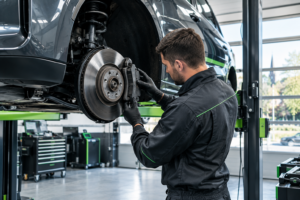
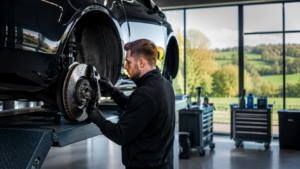
A high-pitched squeal when you apply the brakes is usually a wear indicator on your brake pads telling you they need replacing. If you’re hearing a deeper grinding sound, the pads may have worn through completely and the metal caliper is contacting the disc — this needs urgent attention and will be significantly more expensive if left.
Drivers in Macclesfield, Poynton, and Bollington should get brake noises checked immediately — don’t leave it until your next scheduled service.
Knocking from the Engine
A rhythmic knocking or tapping sound from the engine can indicate low oil pressure, worn engine bearings, or a failing hydraulic lifter. Any of these left unchecked can lead to major engine damage.
Clunking Over Bumps
A clunking sound when going over speed bumps or potholes (common on Cheshire’s rural roads) often points to worn suspension components such as shock absorbers, ball joints, or anti-roll bar bushes. These affect handling and safety as well as comfort.
Humming or Whining That Changes with Speed
A humming sound that rises and falls with your road speed — rather than your engine revs — often points to a worn wheel bearing. Left too long, a wheel bearing can seize completely, which is dangerous at motorway speeds.
Performance Issues Worth Investigating
Not all problems announce themselves with a loud noise or a flashing light. Sometimes the car just doesn’t feel right.
Loss of Power or Sluggish Acceleration
If your car feels slower than usual, struggles to pull away, or hesitates when you put your foot down, there are several possible causes — a blocked fuel filter, failing fuel pump, faulty mass airflow sensor, or a clogged diesel particulate filter (DPF), to name a few.
A diagnostic check at CSG Automotive in Macclesfield can pinpoint the exact cause quickly.
Pulling to One Side
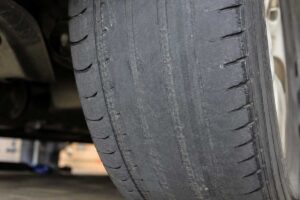
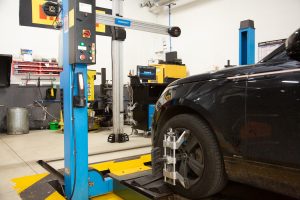
If your car consistently pulls left or right without input from the steering wheel, you could be looking at uneven tyre pressures, a brake issue, or a wheel alignment problem. Misalignment also causes uneven tyre wear, so it’s worth sorting promptly.
Excessive Vibration Through the Steering Wheel
Vibration through the steering wheel at certain speeds is often caused by wheels being out of balance — a quick and inexpensive fix. If the vibration is more constant or gets worse under braking, it could point to warped brake discs or a worn steering component.
Fluid Leaks and Smells You Shouldn’t Dismiss
Puddles Under the Car
If you notice a puddle where your car has been parked, the colour can tell you a lot:
- Clear water: Usually just condensation from the air con — nothing to worry about.
- Brown or black oily puddle: Engine oil leak — get it checked soon.
- Red or pink fluid: Transmission fluid or power steering fluid leak.
- Green or orange liquid: Coolant — this needs immediate attention as coolant loss can cause overheating.
Burning Smell
A burning smell from the engine bay could mean oil is dripping onto a hot surface, a coolant leak is burning off on the exhaust, or your brake pads are overheating. Any burning smell should be investigated by a mechanic without delay.
Petrol or Diesel Smell Inside the Cabin
Fuel smell inside the car is a serious safety concern. It could indicate a fuel leak or a failing fuel injector seal. Don’t ignore it.
Conclusion
Your car will usually give you fair warning before something goes badly wrong — the key is acting on those warnings rather than hoping they’ll disappear. The longer you leave most car problems, the more expensive and complex they tend to become.
At CSG Automotive in Macclesfield, our experienced technicians can diagnose and repair everything from brake issues and engine faults to suspension problems and fluid leaks. We serve drivers across Macclesfield, Knutsford, Wilmslow, Congleton, Bollington, and Poynton.
If your car is showing any of the signs above, don’t wait — book a diagnostic or inspection at CSG Automotive today.
- Car Warning Lights Explained
- Getting Your Car Ready for Your Summer Holiday
- Independent Garage vs Dealership: Which Should You Choose?
Frequently Asked Questions
The most common warning signs include dashboard warning lights (especially the engine management light, oil pressure, and brake warning), unusual noises such as squealing brakes or engine knocking, fluid leaks under the car, loss of power, and the car pulling to one side.
It depends on the nature of the fault. If the light is on but the car is driving normally, it’s usually safe to drive to a nearby garage. If the light is flashing, or if you notice a loss of power or unusual behaviour, pull over safely and call for assistance.
Contact CSG Automotive directly for current pricing. A diagnostic scan can quickly identify the fault code triggering your warning light, saving time and money compared to guesswork repairs.
No. Even a slow oil leak can lead to low oil pressure, which causes serious engine damage if not addressed. Get any oil leak checked and repaired at a garage as soon as possible.
The most common causes are uneven tyre pressures, a wheel alignment issue, or a brake fault. All three are easy to diagnose and relatively straightforward to fix — but left unchecked, they affect both safety and tyre wear.
GOV.UK: Vehicle defects and the law
RAC: Car warning lights guide
TyreSafe: Tyre safety and maintenance