Introduction
Wheel alignment is one of those car maintenance tasks that doesn’t get much attention until something goes wrong. Unlike an oil change or an MOT, there’s no dashboard light that tells you your wheels are out of alignment — yet poor alignment quietly costs you money every time you drive, through accelerated tyre wear, reduced fuel efficiency, and added stress on your suspension and steering components.
For drivers in Macclesfield, Knutsford, Wilmslow, and across Cheshire, misalignment is a particularly common issue. Potholes, kerbs, speed bumps, and the kind of rural roads that criss-cross the Peak District fringe all take their toll on wheel alignment over time — and it doesn’t take a serious impact to knock things off.
This guide explains what wheel alignment is, why it matters, how to spot the signs that yours needs attention, and what a professional alignment service at CSG Automotive in Macclesfield actually involves.
What Is Wheel Alignment?
Wheel alignment — sometimes called tracking — refers to the angle and direction at which your tyres contact the road. When a car leaves the factory, the wheels are set to precise angles specified by the manufacturer to ensure optimal tyre contact, handling, and fuel efficiency.
The Key Alignment Angles
There are three main alignment angles that technicians measure and adjust:
Toe
Toe describes whether the fronts of the tyres point inward toward each other (toe-in) or outward away from each other (toe-out) when viewed from above. Even a small amount of incorrect toe causes the tyres to scrub against the road surface as the car moves forward — like walking with your feet pointed outward. This is the most common alignment issue and the one that destroys tyres fastest.
Camber
Camber is the inward or outward tilt of the tyre when viewed from the front of the car. Negative camber (top of the tyre tilted inward) is normal in small amounts and designed into many vehicles. Excessive camber — positive or negative — causes uneven tyre wear and affects cornering stability.
Caster
Caster is the angle of the steering axis when viewed from the side of the car. It affects steering feel and straight-line stability rather than tyre wear directly. Incorrect caster can make the steering feel heavy, light, or cause the car to wander on the motorway.
Signs Your Wheels May Be Misaligned
Because alignment changes gradually — or suddenly after a pothole or kerb strike — it’s worth knowing what to look out for.
The Car Pulls to One Side
If you’re on a flat, straight road and the car drifts noticeably to the left or right when you take your hands off the wheel, misalignment is a likely cause. Check your tyre pressures first — uneven pressures can produce the same symptom — but if pressures are correct, book an alignment check.
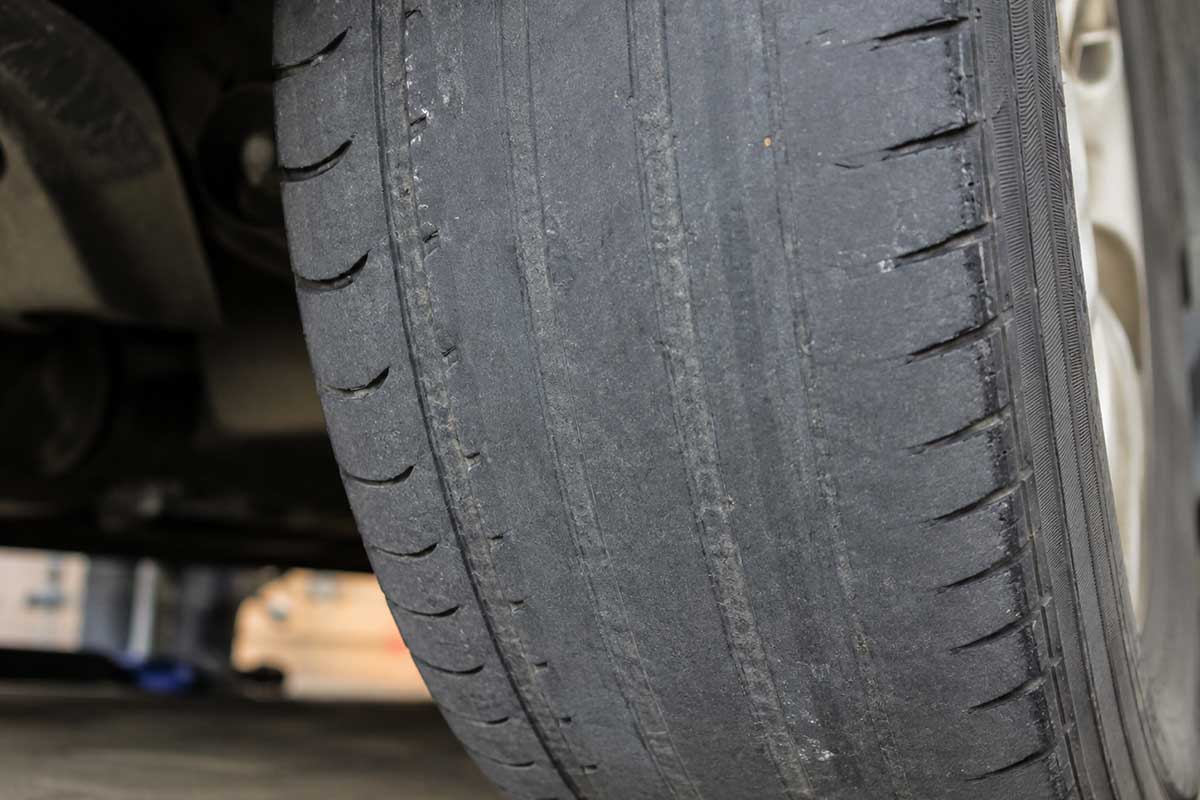
Uneven Tyre Wear
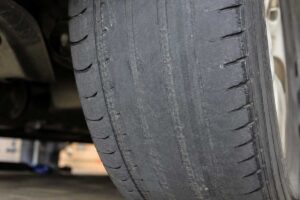
This is the most financially damaging consequence of poor alignment. Check your tyres regularly, not just for overall tread depth but for the wear pattern across the tyre:
- Wear on the inner or outer edge only: Classic sign of camber or toe misalignment
- Feathering or sawtooth wear pattern: Typically caused by toe misalignment
- Wear on both edges but not the centre: More likely to be chronic under-inflation, but can combine with alignment issues
A tyre that should last 25,000 miles can wear out in half that distance if alignment is significantly out. On Cheshire roads — particularly after a hard winter — it’s worth checking alignment before fitting new tyres, otherwise you’re fitting fresh rubber onto a misaligned setup and shortening its life immediately.
Steering Wheel Off-Centre
If your steering wheel isn’t centred when you’re driving in a straight line — even slightly — that’s a clear indicator the alignment is off. It might be subtle, but you’ll notice the logo or markings on the wheel are consistently tilted to one side.
Increased Fuel Consumption
Misaligned wheels create rolling resistance. The tyres are effectively fighting against the direction of travel rather than rolling cleanly with it. This increases fuel consumption — not dramatically, but noticeably over time and at a time when fuel costs in Cheshire are already a consideration for most drivers.
Vibration Through the Steering Wheel
Alignment issues can cause vibration, particularly at certain speeds. Note that vibration can also be caused by unbalanced wheels — both are worth checking together.
What Causes Wheel Alignment to Go Out?
Potholes and Road Impacts
The number one culprit on UK roads. Hitting a pothole at speed can knock alignment angles out in an instant — and the roads around Macclesfield, the Peak District fringe, and rural Cheshire are not kind on suspension geometry. If you’ve hit a particularly bad pothole and noticed any change in how the car drives afterwards, get the alignment checked.
Kerb Strikes
Catching a kerb when parking, or clipping a raised kerb on a tight corner, is a very common cause of alignment problems — particularly on the front left wheel. Even at low speed, the impact can shift the alignment and, in some cases, damage suspension components.
Worn Suspension Components
Shock absorbers, control arm bushes, ball joints, and tie rod ends all wear over time. As these components lose their rigidity, they allow the wheel angles to shift. If you’re having suspension components replaced, it’s always worth getting the alignment checked and reset at the same time — at CSG Automotive in Macclesfield, we routinely recommend this.
Normal Wear Over Time
Even without any specific impact, alignment can drift gradually as suspension components flex and wear. That’s why it’s good practice to check alignment every 12–18 months or with each set of new tyres.
What Does a Wheel Alignment Service Involve?
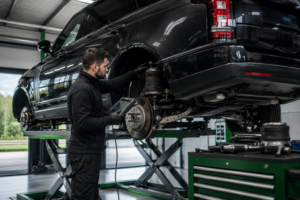
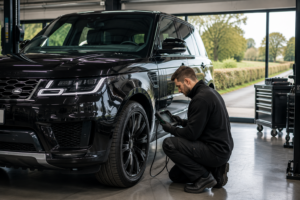
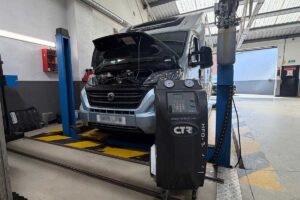
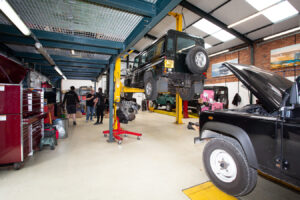
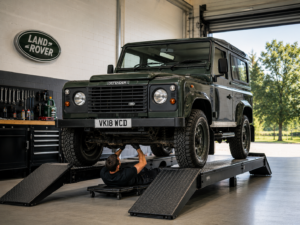
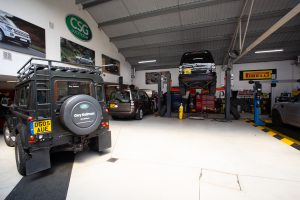
A professional wheel alignment service at CSG Automotive in Macclesfield uses computerised alignment equipment to measure the precise angles of all four wheels against your vehicle manufacturer’s specifications.
Four-Wheel Alignment vs. Two-Wheel Alignment
- Two-wheel (front axle) alignment measures and adjusts only the front wheels. Suitable for some older or simpler vehicles.
- Four-wheel alignment measures all four wheels and their relationship to each other and to the vehicle’s centreline. This is the recommended option for the majority of modern cars, particularly those with independent rear suspension.
If your garage is only offering two-wheel tracking and your car has adjustable rear suspension geometry, you may not be getting the full picture.
How Long Does It Take?
A four-wheel alignment check and adjustment at CSG Automotive typically takes between 45 minutes and an hour, depending on the vehicle and how much adjustment is needed.
Conclusion
Wheel alignment is one of the most cost-effective maintenance services you can invest in. It extends the life of your tyres, improves fuel economy, keeps your car handling safely, and reduces wear on steering and suspension components. The consequences of ignoring it — premature tyre replacement, increased fuel bills, handling issues — far outweigh the modest cost of an alignment check.
At CSG Automotive in Macclesfield, we offer four-wheel computerised alignment for all makes and models. Whether you’ve hit a bad pothole, just fitted new tyres, or simply haven’t had your alignment checked in a while, our team is here to help. We serve drivers across Macclesfield, Knutsford, Wilmslow, Congleton, Bollington, and Poynton.
Book a wheel alignment check at CSG Automotive in Macclesfield today.
- Signs Your Car Needs Professional Repairs
- Getting Your Car Ready for Your Summer Holiday
- Driving Abroad in 2026? Essential Car Checks Before You Go
Frequently Asked Questions
The most common signs are the car pulling to one side on a straight road, uneven or rapid tyre wear, a steering wheel that isn’t centred when driving straight, and slightly increased fuel consumption. Any of these warrant a check.
Most garages recommend checking alignment every 12–18 months, whenever you fit new tyres, or after any significant impact such as a pothole or kerb strike.
Most garages recommend checking alignment every 12–18 months, whenever you fit new tyres, or after any significant impact such as a pothole or kerb strike.
Alignment refers to the angles at which your wheels meet the road. Balancing refers to the even distribution of weight around each wheel and tyre assembly. Both affect ride quality and tyre wear, but they’re different services. Vibration through the steering wheel at speed is more commonly a balancing issue; pulling to one side and uneven tyre wear are more commonly alignment issues.
Yes. CSG Automotive uses computerised four-wheel alignment equipment and can check and adjust alignment on all makes and models.
Yes — even hitting a pothole at moderate speed can shift alignment angles significantly. If you notice any change in how the car drives after a pothole strike, get the alignment checked promptly.
TyreSafe: Tyre safety and maintenance
RAC: Wheel alignment explained
GOV.UK: Vehicle condition and tyre regulations