Introduction
Taking your own car across the Channel is one of the great freedoms of European travel — no hire car queues, no luggage restrictions, and the comfort of knowing exactly how your vehicle drives. But driving abroad puts extra demands on your car, and the rules of the road — and what you’re legally required to carry — vary significantly from country to country.
Every summer, UK drivers set off from places like Macclesfield, Wilmslow, and Knutsford heading for France, Spain, Italy, and beyond, only to discover a problem on the motorway that a quick pre-trip check would have caught. A breakdown at home is inconvenient. A breakdown on the A7 autoroute in southern France with a family on board is a different level of stress entirely.
This guide covers everything you need to check on your car before driving abroad in 2026 — and what you need to pack to stay legal and safe wherever you’re heading.
Mechanical Checks Before Driving Abroad
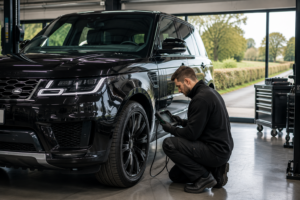
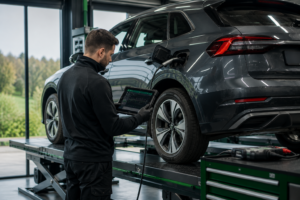
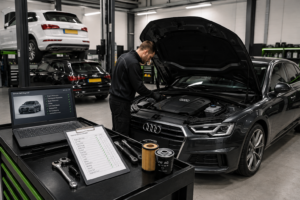
A long European drive is significantly more demanding than everyday UK motoring. Motorway speeds sustained over hundreds of miles put more strain on tyres, brakes, cooling systems, and engine components than a commute ever does. Get these checked before you go.
Tyres
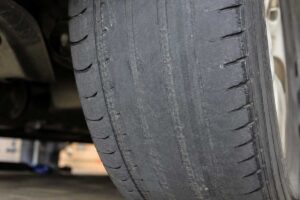
Tyres are the single most important check before any long trip — and even more so when driving abroad, where speed limits are often higher and road conditions can differ significantly from what you’re used to in Cheshire.
- Tread depth: The UK legal minimum is 1.6mm, but 3mm or above is strongly recommended for motorway driving. Some European countries have higher minimum requirements.
- Tyre pressure: Check and adjust for a fully loaded car — your handbook will give you the correct figures. Under-inflated tyres overheat more quickly, which is a particular risk on sustained high-speed driving.
- Tyre condition: Check for bulges, cracks, or uneven wear. Any tyre in questionable condition should be replaced before you travel.
- Spare tyre or repair kit: Know what your car carries and make sure it’s in usable condition. Some European breakdown services won’t fit a temporary spare if your car isn’t equipped with one.
Brakes
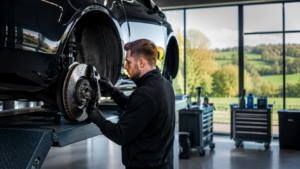
European motorway driving often involves longer periods of sustained speed followed by sharper braking at toll booths or junctions. If your brakes are already marginal, this kind of driving will expose it quickly.
Signs your brakes need attention before travelling abroad:
- Squealing or grinding when braking
- The car pulling to one side
- Increased stopping distances
- A soft or spongy brake pedal
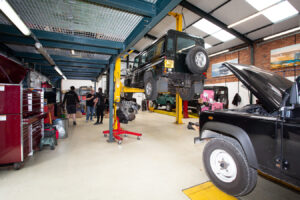
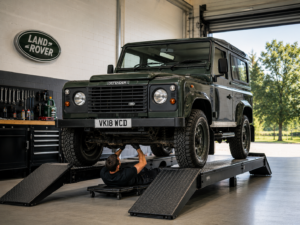
Get a brake inspection at CSG Automotive in Macclesfield before your trip if you have any concerns — our team serves drivers across Macclesfield, Congleton, Poynton, and the wider Cheshire East area.
Engine Oil and Fluids
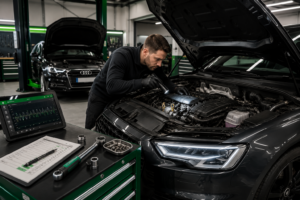
Check all fluid levels before a long trip:
- Engine oil: Check with the dipstick when the engine is cold. Top up if needed, and consider an oil change if you’re due one — fresh oil handles the demands of sustained motorway driving better than old, degraded oil.
- Coolant: Vital on hot European roads. Ensure the reservoir is between the min and max markers.
- Brake fluid: Low brake fluid affects braking performance. If the level is low, get it investigated — it usually indicates worn pads or a leak.
- Screen wash: European roads can be dusty and bugs are a persistent problem in summer. Make sure your washer reservoir is full.
Battery
Heat accelerates battery degradation, and if your battery is already weakening, a hot European summer could tip it over the edge. If your battery is more than three years old, have it load-tested before you travel. A flat battery in a foreign country is far more complicated and expensive to deal with than at home.
Air Conditioning
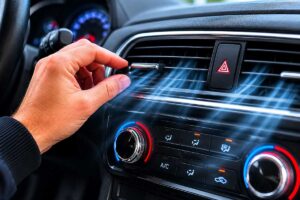
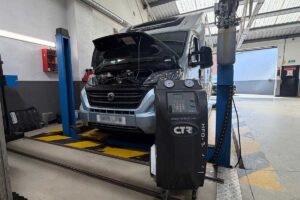
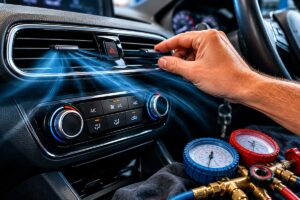
If your AC isn’t performing well in Macclesfield on a warm June day, it will struggle even more in the south of France in August. Get your AC serviced or regassed before you go — it’s genuinely a safety issue on very hot days, not just a comfort one. Driver fatigue increases significantly in a hot, uncomfortable car.
What You Are Legally Required to Carry When Driving Abroad
This is where many UK drivers get caught out. Requirements vary by country, but here’s a practical guide to the most popular European destinations.
Items Required in Most European Countries
| Item | France | Spain | Germany | Italy |
| Warning triangle | ✅ Required | ✅ Required | ✅ Required | ✅ Required |
| High-visibility vest | ✅ Required | ✅ Required | Recommended | ✅ Required |
| First aid kit | Recommended | Recommended | ✅ Required | Recommended |
| Fire extinguisher | Recommended | Recommended | Recommended | Recommended |
| Spare bulb kit | Recommended | Recommended | Recommended | Recommended |
| Headlight beam deflectors | ✅ Required | ✅ Required | ✅ Required | ✅ Required |
Headlight Beam Deflectors
This is the one most UK drivers forget. Because UK cars are right-hand drive, your headlights dip to the left — which means when driving on the right in Europe, they dip into the path of oncoming traffic. Beam deflectors are small adhesive stickers that correct the beam angle. They’re inexpensive, available from most motor factors and online, and legally required in most European countries.
GB or UK Sticker
Since the UK left the EU, GB number plates are no longer automatically recognised in all European countries. If your number plate doesn’t display a UK identifier, you’ll need a separate UK sticker on the rear of the vehicle.
Documents to Take When Driving Abroad
Don’t leave Macclesfield without these:
- Driving licence (UK photocard licence is accepted across Europe)
- Vehicle registration document (V5C) — or a VE103 letter if the car is leased or on finance
- Proof of insurance — check your policy covers you in each country you’re visiting. Call your insurer if unsure; many UK policies limit European cover to third party only unless you request an upgrade.
- MOT certificate (if your vehicle is over three years old)
- European breakdown cover documents — if you don’t have this, get it before you go
Green Card Insurance
Although the Green Card is no longer mandatory in most EU countries, it’s still recommended as proof of insurance and accepted everywhere. Your insurer can provide one — often free of charge.
Planning Your Route: A Few Practical Points
- Vignettes: Several European countries require a vignette (motorway toll sticker) for their road networks. Austria, Switzerland, and Hungary all require these — you cannot pay at a toll booth and failure to display one results in a significant fine.
- Low Emission Zones: France has Crit’Air zones in major cities. If you’re driving into Paris, Lyon, or other city centres, check whether your vehicle needs a Crit’Air vignette and what classification it holds.
- Speed limits: These differ significantly across Europe and are often lower than UK drivers expect on rural roads. France, for example, reduced its rural speed limit from 90km/h to 80km/h in recent years.
Conclusion
Driving abroad in 2026 can be one of the most rewarding ways to travel — but it rewards preparation. Getting your car professionally checked before you leave Macclesfield, packing the right equipment, and making sure your documents are in order takes a few hours and could save you days of disruption.
At CSG Automotive in Macclesfield, we offer comprehensive pre-travel vehicle inspections covering tyres, brakes, fluids, battery, lights, and air conditioning — everything you need to set off with confidence. We serve drivers across Macclesfield, Knutsford, Wilmslow, Congleton, Bollington, and Poynton.
Book your pre-travel car check at CSG Automotive before you head for the ferry.
- Getting Your Car Ready for Your Summer Holiday
- Signs Your Car Needs Professional Repairs
- Car Air Conditioning Care 2026: Essential Tips for Every Driver
Frequently Asked Questions
You need your UK driving licence, V5C (or VE103 for leased vehicles), proof of insurance covering the countries you’re visiting, your MOT certificate, and European breakdown cover documents. A Green Card from your insurer is also recommended.
It depends on the country. Austria, Switzerland, and Hungary all require a vignette for motorway use. Check the requirements for each country on your route before travelling.
Most UK insurance policies include some European cover, but many default to third-party only. Check your policy wording or call your insurer before travelling. You may need to request a European extension for fully comprehensive cover.
Yes. CSG Automotive provides thorough vehicle health checks covering all the key areas for long-distance and European driving — tyres, brakes, fluids, battery, lights, and AC. Contact us to book before your trip.
Contact your European breakdown cover provider immediately. If you don’t have European breakdown cover, add it to your policy or purchase standalone cover before travelling — it’s relatively inexpensive and can save you thousands in recovery costs.
GOV.UK: Driving abroad — what you need
RAC: European driving requirements by country
The AA: Driving in Europe guide