
Introduction
Ask most drivers how they maintain their car’s air conditioning, and you’ll get a blank look. Oil? Tyres? Sure. But the AC? That’s one of those things people tend to ignore until it stops working during the first proper heatwave of the year.
In 2026, with summer temperatures continuing to surprise us across Cheshire and beyond, keeping your car’s air conditioning in good shape isn’t just about comfort — it’s about staying safe and alert on longer journeys, and avoiding a costly repair that could easily have been prevented.
Whether you’re a daily commuter in Macclesfield, doing the school run in Knutsford, or regularly driving up to Manchester and back, these practical tips will help you get the most from your car’s AC system all year long.
Tip 1: Run Your Air Conditioning All Year Round
This is the single most effective thing you can do to keep your AC in good shape — and most drivers don’t do it.
Why Year-Round Use Matters
Your AC system relies on the refrigerant circulating through it to lubricate the seals, o-rings, and the compressor itself. When the system sits unused for months — as it often does during autumn and winter in Macclesfield — those seals dry out, refrigerant slowly escapes, and the compressor can develop problems.
The fix is simple:
- Run your air conditioning for at least 10 minutes per week, even in the depths of January.
- You don’t need to freeze yourself — just turn it on at a comfortable temperature.
- On modern cars, the AC often runs automatically when you use the demist function, so you may already be doing this without realising.
Bonus: Faster Demisting
Running the AC in winter isn’t just about maintaining the system. Because air conditioning removes moisture from the air, it demists your windscreen significantly faster than blowing warm, damp air at it. It’s one of the genuinely useful winter driving hacks.
Tip 2: Don’t Ignore Small Changes in Performance
One of the most common calls garages in Macclesfield receive in June goes something like: “My AC was fine last summer, now it’s barely doing anything.” In almost every case, the decline was gradual — it just wasn’t noticed until the weather got hot enough to matter.
What to Watch For
- Less cold air than before: Refrigerant levels dropping. Book a regas.
- Takes longer to cool the cabin: Could be refrigerant, a partially blocked condenser, or a struggling compressor.
- Musty smell when you switch it on: Bacteria and mould on the evaporator — an antibacterial clean will sort this.
- AC cuts in and out: Often a sign of an electrical fault or a failing compressor clutch.
- Hissing sound from the dashboard: Can indicate a refrigerant leak — get this checked promptly, as refrigerant loss accelerates once a leak develops.
Catching these signs early at CSG Automotive in Macclesfield means a simple service rather than a more involved repair.
Tip 3: Change Your Cabin Filter Regularly
Your cabin air filter — sometimes called a pollen filter — is the unsung hero of your car’s ventilation system. It cleans the air coming into the cabin, filtering out dust, pollen, pollution, and other particles before they reach you and your passengers.
How Often Should You Change It?
Most manufacturers recommend replacing the cabin filter every 12,000–15,000 miles or once a year, whichever comes first. In practice, many drivers go two or three years without changing it.
A blocked cabin filter:
- Reduces airflow through your vents, making the AC work harder
- Makes the system less effective at cooling
- Can contribute to musty smells
- Circulates dusty, unfiltered air around the cabin — not ideal for anyone with allergies or asthma
Cabin filters are relatively inexpensive and quick to change. If you’re having your AC serviced at CSG Automotive in Macclesfield, ask us to check the cabin filter at the same time.
Tip 4: Book an AC Regas Every Two Years
Even a perfectly healthy AC system loses refrigerant over time. The system is sealed, but not perfectly — gas gradually permeates through seals and hoses at a rate of around 10–15% per year. After two years, that’s enough to noticeably affect performance.
What Does an AC Regas Involve?
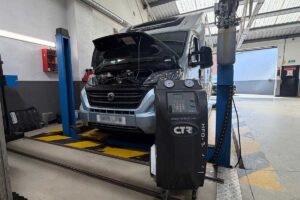
At CSG Automotive in Macclesfield, an AC regas includes:
1. Extracting and recovering any remaining refrigerant
2. Testing the system for leaks
3. Pulling a vacuum to remove any moisture from the system
4. Recharging with the correct refrigerant to the manufacturer’s specification
The whole process typically takes under an hour and makes a dramatic difference to how cold your air con blows.
R134a vs R1234yf: Does It Matter?
Yes. Most cars manufactured before 2017 use the older R134a refrigerant. Cars made after 2017 typically use the newer R1234yf, which is more environmentally friendly but more expensive per kilogram. Make sure your garage is certified to handle both — CSG Automotive in Macclesfield is equipped and certified for all refrigerant types.
Tip 5: Use Your AC Smartly to Save Fuel
Air conditioning does increase fuel consumption — typically by around 5–10% depending on conditions. Here are a few ways to keep that impact minimal:
- Don’t blast it from cold: If the car has been sitting in the sun, open the windows for a minute to let the hot air out before switching on the AC. The system cools faster and uses less energy when it’s not fighting a 50°C cabin.
- Use recirculation mode: Once the cabin is at a comfortable temperature, switch to recirculation (the button with a car and curved arrow). This recirculates the already-cooled cabin air rather than pulling in hot air from outside.
- Set a sensible temperature: Aim for around 22°C rather than the coldest setting. The system runs more efficiently and you won’t end up freezing.
- Switch off a few minutes before you park: Turning the AC off a couple of minutes before you arrive lets the system dry out slightly, reducing the chance of musty smells developing.
Conclusion
Caring for your car’s air conditioning in 2026 doesn’t need to be complicated. Run it regularly, pay attention to early warning signs, keep the cabin filter fresh, and book a regas every couple of years — that’s really all it takes.
CSG Automotive in Macclesfield offers full air conditioning servicing, including regas, antibacterial treatments, leak testing, and cabin filter replacement. We look after drivers across Macclesfield, Wilmslow, Knutsford, Congleton, Bollington, and Poynton.
Don’t wait for a hot day to find out your AC isn’t working — book a check with CSG Automotive today.
- The Complete Guide to Car Air Conditioning Maintenance
- Getting Your Car Ready for Your Summer Holiday
Frequently Asked Questions
As a general rule, book an AC regas every two years and replace the cabin filter annually or every 12–15,000 miles. If you notice any drop in performance or unusual smells, get it checked sooner.
No — quite the opposite. Running your AC for 10 minutes a week in winter keeps the seals lubricated and the compressor in good condition. Leaving it unused for months is what causes problems.
Musty smells are caused by bacteria and mould growing on the evaporator and in the ducts. An antibacterial AC clean removes this quickly. Leaving it can worsen over time and affect air quality in the cabin.
Usually yes — as long as the system isn’t leaking badly. A regas is inexpensive relative to the comfort benefit. If there’s a significant leak, the technician will advise you on the cost of repair versus the age and value of the vehicle.
CSG Automotive in Macclesfield offers a full range of AC services including regas, antibacterial treatments, leak testing, and cabin filter replacement — for all makes and models.
RAC: Car air conditioning maintenance advice
Energy Saving Trust: How AC affects fuel consumption
GOV.UK: F-gas regulations for vehicle AC