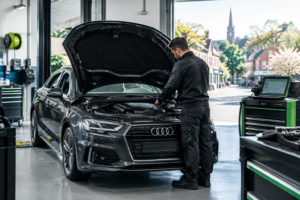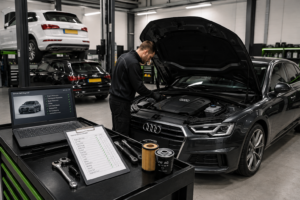
Audis have a reputation for quality, and generally deserve it — but every marque has its known weak points, and after years of servicing them at our Macclesfield workshop, a handful of faults come round again and again.
The Audi faults independent garages see most often are timing chain tensioner wear on 1.8 and 2.0 TFSI petrol engines, DSG gearbox mechatronic unit faults, carbon build-up on direct-injection engines, and electronic parking brake motor failures.
Most are known issues tied to specific engine and gearbox codes rather than random bad luck, which means early symptoms are usually recognisable if you know what to look for.
None of this makes an Audi a bad choice — it simply means knowing what to watch for keeps repair bills predictable rather than surprising.
Why Do Timing Chains Rattle on TFSI Engines?
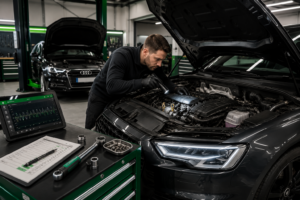
The 1.8 and 2.0 TFSI petrol engines fitted across the A3, A4, A5 and Q5 ranges from the mid-2000s through the early 2010s are well documented for timing chain tensioner wear. The tensioner is hydraulically operated, and over time it can lose the ability to keep the chain properly taut, which shows up first as a rattling noise on cold start-up that quietens as the engine warms.
Left unaddressed, a worn tensioner can allow the chain to jump timing, and on these engines that’s a genuinely serious fault — potentially bending valves if it happens while driving. It’s one of the few Audi issues we’d actively encourage getting checked at the first hint of a cold-start rattle rather than waiting to see if it gets worse.
What Goes Wrong With Audi DSG Gearboxes?
The dual-clutch DSG automatic is one of Audi’s best features when it’s working properly — smooth, quick-shifting, and efficient. The mechatronic unit, which controls the clutches and gear selection electronically, is the part that most commonly causes problems, typically showing up as hesitant or jerky changes, particularly from a standstill, or occasional warning messages on the dashboard about reduced gearbox performance.
DSG fluid and filter changes at the intervals Audi specifies (often every four to five years or set mileage, rather than “lifetime” as some owners assume) genuinely reduce the likelihood of mechatronic problems. It’s one of the cheaper preventative jobs relative to the cost of the alternative, which can run into four figures if the unit itself needs replacing.
Why Do Audi Engines Get Carbon Build-Up?
Direct-injection engines — which cover most of the modern Audi TFSI and TDI range — spray fuel straight into the combustion chamber rather than over the intake valves first. That’s good for efficiency and power, but it means there’s no fuel wash over the back of the intake valves, so carbon from oil vapour and combustion gases gradually builds up there instead.
Symptoms creep in gradually: a rougher idle, slightly reduced power, occasional misfires, or increased fuel consumption. It’s rarely urgent, but it’s progressive, and by the time it’s noticeably affecting how the car drives, a proper walnut-shell blasting or chemical intake clean is usually needed to restore performance.
Why Does the Electronic Parking Brake Fail?
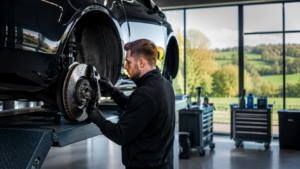
Since Audi moved from a manual handbrake lever to an electronic parking brake button across most of the range, the motors that operate the rear brake calipers have become a recognised wear point. A failing motor typically shows as the parking brake being slow to release, an intermittent warning light, or in some cases the brake refusing to release at all — which is inconvenient at best and can leave a car briefly undriveable.
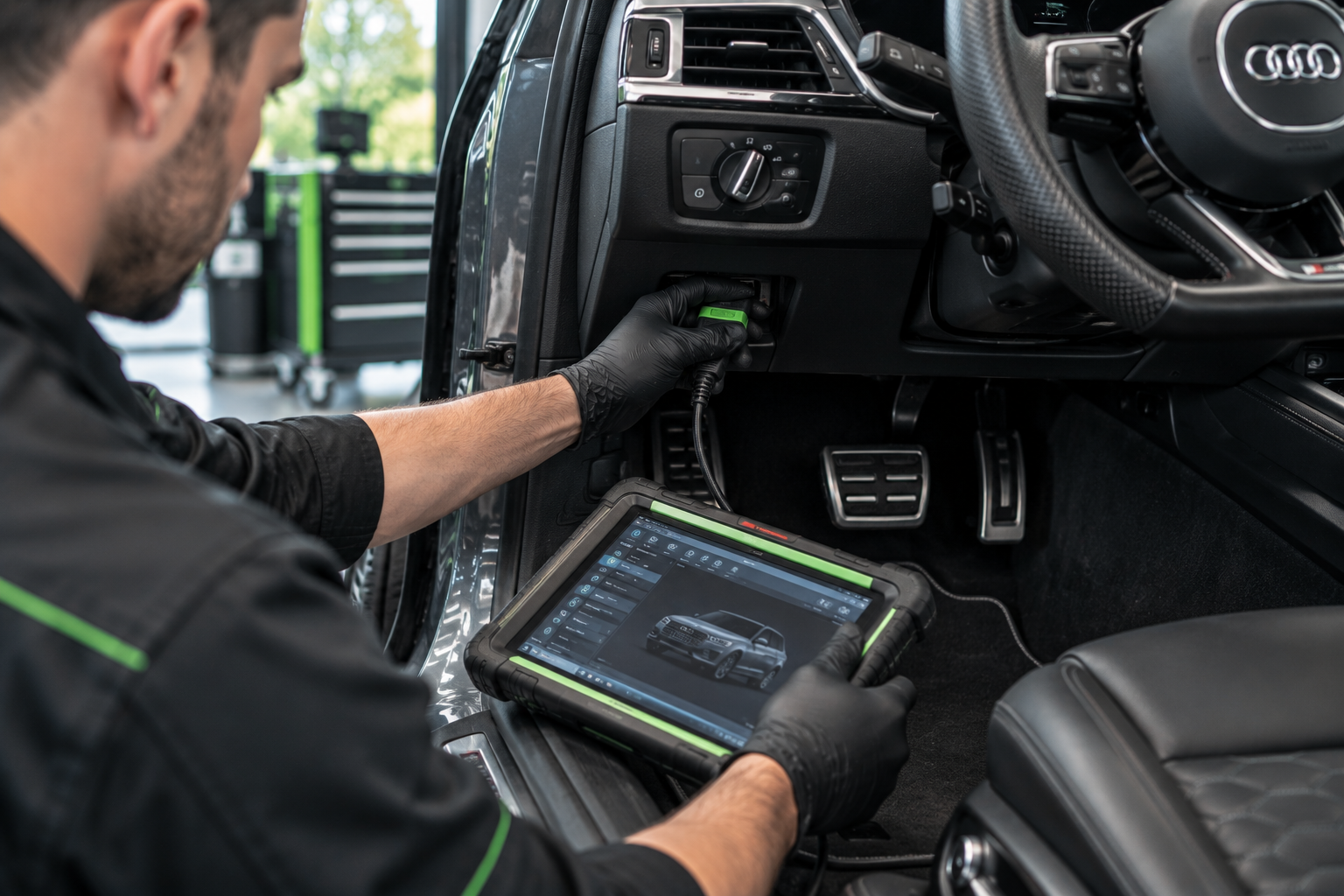
The motors themselves are a relatively affordable, well-understood repair for an independent specialist, though they’re not usually something worth attempting without the right diagnostic equipment, since the system needs to be correctly recalibrated afterwards.
Are These Faults Expensive to Fix?
Costs vary considerably by model, engine, and how early the fault is caught, so we’d always rather quote after a proper look than guess a figure here. As a general pattern, though, catching timing chain wear early, keeping up with DSG fluid changes, and addressing a rough idle before it becomes a misfire all tend to keep costs towards the lower end of what’s possible — it’s the faults left to develop that get expensive.
Should I Avoid Buying an Audi Because of This?
Not necessarily. Every manufacturer has model-specific weak points — these are simply Audi’s best-known ones, and they’re well understood by independent specialists precisely because they come up so often. A car with full service history, evidence of DSG fluid changes at the right intervals, and no unexplained warning lights is a very different proposition to one with a patchy history, regardless of badge.
If you’re looking at a used Audi, it’s worth having a pre-purchase inspection that specifically checks for these four areas rather than a generic once-over.
What Should I Do If I Notice Any of These Symptoms?
A cold-start rattle, hesitant DSG changes, a rougher idle than usual, or a slow-releasing parking brake are all worth booking in promptly rather than monitoring for a few months. Early diagnosis on any of these four issues tends to mean a smaller, cheaper repair — the timing chain issue in particular is genuinely worth acting on quickly given what’s at stake if it’s left.
Frequently Asked Questions
What does a rattling noise on cold start mean on an Audi?
On 1.8 and 2.0 TFSI petrol engines, a rattle on cold start-up that fades as the engine warms is a classic sign of timing chain tensioner wear. It’s worth having checked promptly, as a worn tensioner can eventually allow the chain to jump timing.
How often should Audi DSG gearbox fluid be changed?
Audi typically specifies DSG fluid and filter changes every four to five years or at a set mileage interval, despite some owners believing it’s a lifetime fluid. Keeping to this interval significantly reduces the risk of mechatronic unit faults developing.
Why does my Audi have a rough idle?
A rough or slightly uneven idle on a direct-injection Audi engine is often caused by carbon build-up on the intake valves, since fuel doesn’t wash over them the way it does on older port-injection engines. A specialist intake clean usually resolves it.
Why won’t my Audi’s electronic parking brake release?
A slow-releasing or unresponsive electronic parking brake usually points to a worn caliper motor. This is a known wear point on Audi’s electronic parking brake system and needs specialist diagnostic equipment to repair and recalibrate correctly.
Are these faults specific to certain Audi models?
Timing chain tensioner wear mainly affects 1.8 and 2.0 TFSI petrol engines from the mid-2000s to early 2010s across the A3, A4, A5 and Q5. DSG issues, carbon build-up, and electronic parking brake wear are more widespread across the modern range wherever those specific components are fitted.
Is it worth buying an Audi with these known issues?
Yes, for most buyers — these are well-understood, well-documented faults that an experienced independent specialist knows how to check for and prevent. Full service history and evidence of correct maintenance intervals matter more than the badge itself.
Book an Audi Health Check
If your Audi is showing any of these symptoms, or you’d simply like peace of mind before a long journey, the team at CSG Automotive in Macclesfield can carry out a full Audi-specific health check covering all four of these known areas.