A new noise from under the bonnet is rarely something to shrug off, and a rattling sound in particular can mean anything from a loose heat shield to a more serious mechanical fault. If you’ve noticed a rattling sound under the bonnet on your daily drive around Macclesfield, Wilmslow or anywhere else in Cheshire, this guide walks through the most common causes, how urgent each one usually is, and when it’s worth booking your car in for a proper look.
A rattling sound under the bonnet is usually caused by a loose heat shield, a worn timing chain, a failing engine mount, or a loose accessory belt component such as a tensioner or pulley. Rattles that appear at idle, get louder when revving, or come with a warning light should be checked by a garage promptly rather than left.
Common Causes of a Rattling Sound Under the Bonnet
Most rattles have a mechanical explanation rather than an electrical one, which is why they’re often easier to diagnose than a warning light on the dashboard. The exact cause depends on when the noise happens — on start-up, at idle, under acceleration or over bumps — and roughly where it seems to be coming from. Below are the causes our technicians see most often at CSG Automotive’s Macclesfield workshop.
Loose or Worn Heat Shields
Heat shields sit around the exhaust manifold and catalytic converter to stop nearby components overheating. Over time the mounting clips and bolts can corrode or work loose, letting the thin metal shield vibrate against the engine or bodywork. This is one of the most common causes of a rattling sound under the bonnet, and it’s usually a straightforward, low-cost fix once identified.
Timing Chain Wear
A worn timing chain, tensioner or guide can produce a distinctive metallic rattle, especially on cold starts before the oil has fully circulated. This one needs more attention than a loose heat shield, because a timing chain that fails completely can cause serious engine damage. If the rattle happens specifically for the first few seconds after starting the engine, it’s worth mentioning this pattern when you call to book a diagnostic check.
Loose Engine Mounts
Engine mounts hold the engine in place and absorb vibration, and when rubber mounts perish or a mounting bracket works loose, the engine can shift slightly and knock against surrounding components. This often shows up as a rattle or clunk that’s more noticeable over speed bumps, potholes, or when pulling away from a standstill. A failed mount can also affect how the car drives, so it’s not one to leave for long.
Belt Tensioners, Pulleys and Accessory Drive Components
The auxiliary belt (sometimes called the fan belt or serpentine belt) drives components like the alternator, power steering pump and air conditioning compressor, and it relies on a tensioner and several pulleys to stay correctly aligned. A worn tensioner bearing or a pulley that’s starting to seize will often rattle or squeal, particularly when the engine is cold. Left unchecked, a seized pulley can eventually cause the belt itself to fail while you’re driving.
Loose Debris or Fittings
Not every rattle points to a fault. Sometimes it really is something as simple as a loose engine cover, an unclipped wiring loom, or a stray tool or bolt that’s found its way into the engine bay. It’s worth a quick visual check under the bonnet for anything obviously loose before assuming the worst, though if nothing stands out, that’s the point to get a technician to take a proper look.
Is It Safe to Drive with a Rattling Sound Under the Bonnet?
The honest answer is that it depends on the cause, which is exactly why guessing isn’t a great strategy. A loose heat shield rattling against a bracket is unlikely to leave you stranded, but a timing chain on the edge of failure, a seized pulley, or a failing engine mount can turn into a breakdown — or a much bigger repair bill — with very little warning.
As a general rule, treat a rattle as worth acting on if it’s new, getting louder, or accompanied by a warning light, a loss of power, or any change in how the car drives or feels. If you’re ever unsure, call ahead and describe what you’re hearing so the team can advise whether it’s safe to drive in or better to arrange recovery.
Why Does the Rattling Get Worse at Idle or When Accelerating?
Where and when a rattle changes tells a technician a lot before they’ve even lifted the bonnet. A noise that’s loudest at idle and fades as engine speed rises often points to something like a heat shield or loose bracket, since idle is when certain vibration frequencies line up with that component. A rattle that gets louder under acceleration, on the other hand, tends to point towards something under load — a pulley, a tensioner, or a component working harder as revs and load increase.
Timing-related rattles are often the opposite: worst on a cold start, then easing off once oil pressure builds and properly lubricates the chain and tensioner. Paying attention to this pattern, and mentioning it when you book your car in, helps our technicians get to the cause faster instead of working through every possibility from scratch.
When Should You Get a Rattling Noise Checked in Macclesfield or Cheshire?
There’s no need to panic over every unfamiliar noise, but there are a few signs that mean it’s time to book the car in rather than wait and see — and the advice is the same whether you’re in Macclesfield itself or nearby in Wilmslow, Knutsford, Alderley Edge, Nantwich, Sandbach, Congleton, Holmes Chapel, Prestbury, Bollington, Altrincham, Middlewich or Northwich. The causes don’t change with postcode.
Book a check sooner rather than later if:
- The rattle is new and you can’t explain it
- It’s getting louder or more frequent over a few days
- It’s joined by a warning light, an unusual smell, or vibration through the pedals or steering wheel
- The engine note or power delivery has changed alongside the noise
- The rattle only happens on cold starts and lasts more than a second or two
None of these guarantee a serious fault, but they’re exactly the kind of pattern our technicians would want to hear about before the car goes much further.
What Happens During a Diagnostic Check at CSG Automotive?
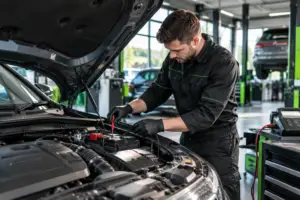
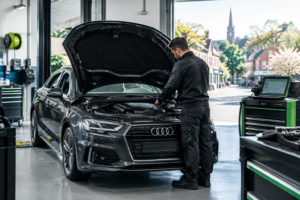
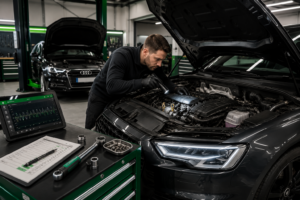
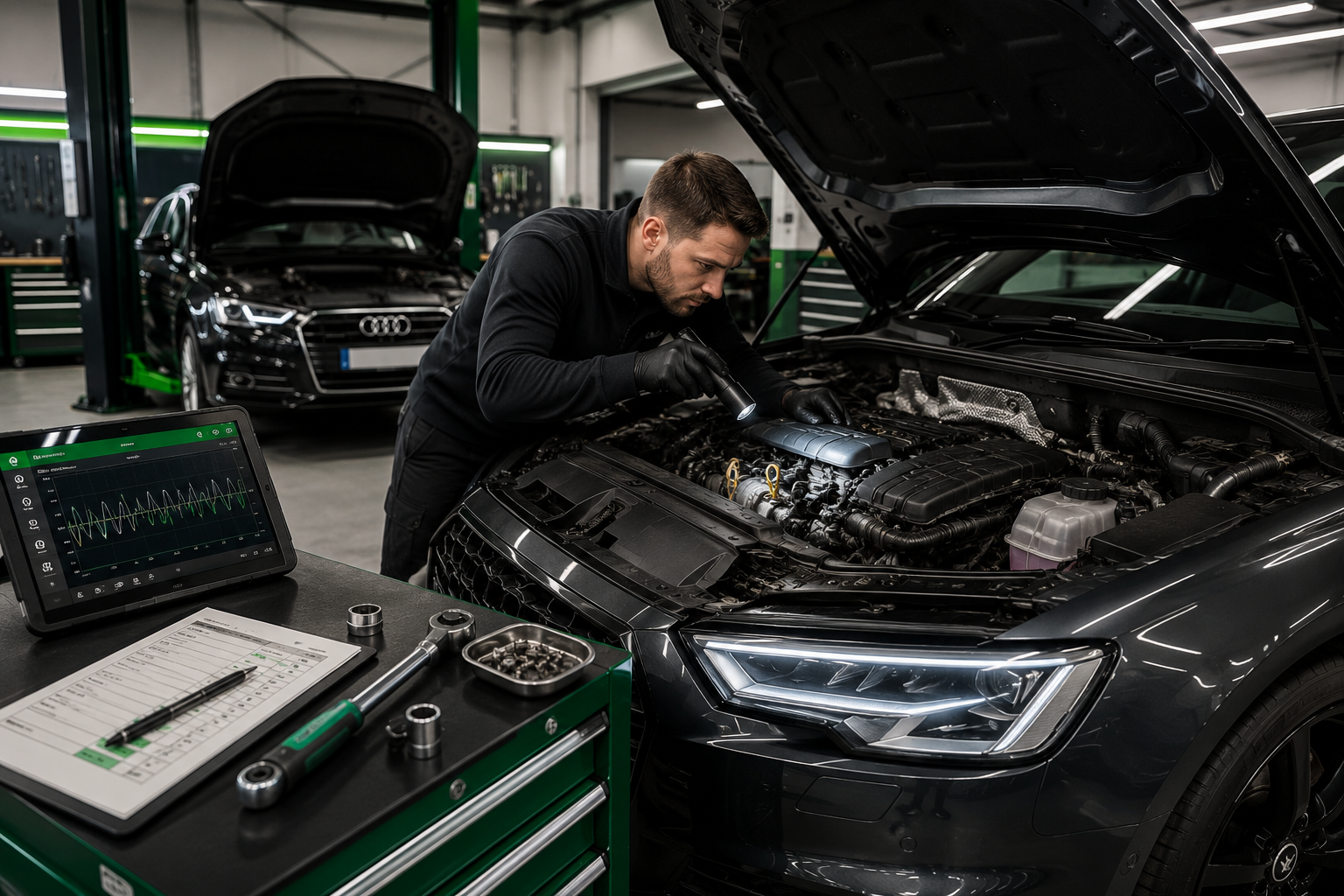
When you bring a rattling sound under the bonnet to CSG Automotive, the first step is simply listening. Our technicians will often want to hear the noise for themselves, ideally with the engine cold if that’s when it’s worst. From there, a visual inspection of the usual culprits — heat shields, mounts, belt components, the timing cover — narrows things down before any parts are touched.
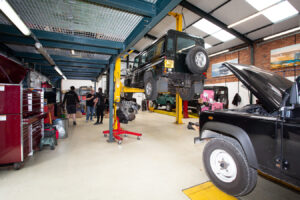
As an independent, family-run garage working across most makes and models, as well as running a dedicated Land Rover and Range Rover diagnostics service, we’re used to tracing rattles on everything from everyday family cars to more complex four-wheel-drive systems. You’ll get a clear explanation of what we’ve found, what it means for your car, and what your options are, with no jargon and no pressure to act on the spot.
Frequently Asked Questions
What does a rattling noise from under the bonnet usually mean? A rattling noise from under the bonnet usually points to a loose or worn component vibrating against something nearby, such as a heat shield, engine mount, belt tensioner or pulley. In some cases it can indicate more serious wear inside the engine, like a stretched timing chain, so it’s worth having any new or worsening rattle checked rather than assumed.
Can I keep driving with a rattling sound under the bonnet? It depends on the cause, but a rattle that’s new, getting louder, or paired with a warning light or a change in performance shouldn’t be ignored. Many causes are minor and safe to drive with for a short while, but a few, such as a failing timing chain or a seized pulley, can lead to a breakdown or expensive damage if left, so a prompt check is the safer option.
Why does my car only rattle when it’s cold? A rattle that appears on a cold start and settles down after a minute or so is a common sign of timing chain or tensioner wear, since oil takes a short time to reach and fully lubricate these components. It can also be a heat shield that only vibrates before the engine reaches full temperature. Either way, it’s worth mentioning this specific pattern when you book a diagnostic check.
Is a rattling sound always expensive to fix? No. Many causes of a rattling sound under the bonnet, such as a loose heat shield or an unclipped engine cover, are quick and inexpensive to put right once identified. Others, such as a worn timing chain or engine mount, involve more labour and parts, so costs vary. The only way to know which you’re dealing with is a proper diagnostic check.
How quickly should I get a rattling noise looked at? If the noise is new, getting louder, or accompanied by a warning light, an unusual smell, or a change in how the car drives, it’s best to book it in within a few days rather than wait. Milder, stable rattles that don’t seem to be changing can usually wait for your next scheduled service, but it’s always worth mentioning them to your technician.
Do you diagnose rattling noises on Land Rover and Range Rover models? Yes. Alongside our general multi-marque servicing, CSG Automotive runs a dedicated Land Rover and Range Rover diagnostics and servicing service, so we’re well set up to trace rattles on these models specifically, including noises related to air suspension, transfer boxes and other Land Rover-specific components.
Book a Check with CSG Automotive
A rattling sound under the bonnet is one of those noises that’s easy to put off investigating, especially when the car still seems to drive normally. In practice, it’s usually your car’s earliest and cheapest way of telling you something needs attention, long before it turns into a breakdown at the roadside. If you’ve noticed a new rattle and you’re not sure whether it’s something to worry about, get in touch with the CSG Automotive team or book your car in for a diagnostic check — we’re based in Macclesfield and cover drivers across Cheshire, from Wilmslow and Knutsford to Congleton and beyond.