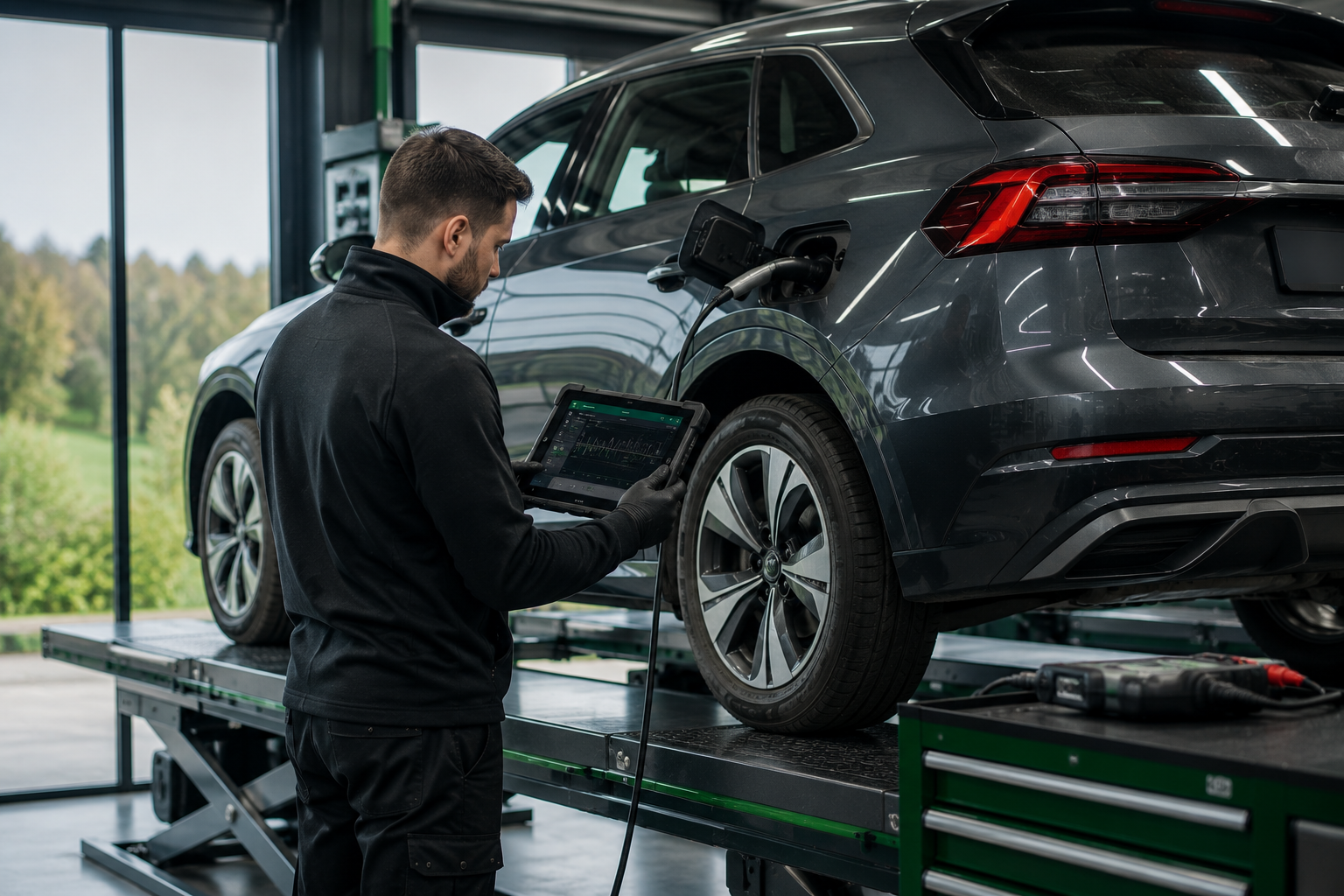
If you’ve swapped to electric, or you’re weighing it up, the first thing most drivers ask is what happens to servicing once you take the engine out of the equation. It’s a fair question, because a lot of what a traditional service covers simply doesn’t apply to an EV.
Most electric cars need a service roughly once a year or every 10,000 to 20,000 miles, in line with the manufacturer’s schedule, similar timing to a petrol or diesel car. There’s no engine oil or spark plugs to worry about, but tyres, brakes, the cabin filter, coolant systems, software and the 12V battery still need regular attention to keep the car safe, efficient and under warranty.
That’s the short answer. The detail is where it gets useful, because servicing an EV covers a different set of jobs to servicing a petrol car, and knowing what those jobs are helps you understand what you’re actually paying for.
So How Often Does an Electric Car Actually Need a Service?
Every manufacturer sets its own service schedule, usually based on time and mileage together, whichever comes first. For most private drivers doing average UK mileage, that tends to work out to an annual visit, much like a conventional car.
Sticking to that schedule matters for two reasons. First, it protects your warranty, since most EV warranties, including the separate battery warranty many manufacturers offer, are conditional on the car being serviced on schedule by a competent garage. Second, it’s how smaller issues, such as a worn tyre, a software glitch or a battery pack fault code, get caught before they turn into a breakdown or an expensive repair.
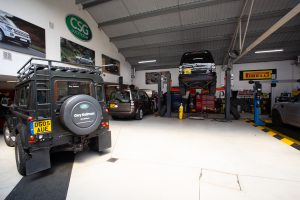
At CSG Automotive, we build our EV and hybrid health checks around the same principle: check what actually wears and ages on an electric car, on a schedule that suits how the car is used, rather than assuming every Cheshire journey looks the same. A car doing regular short runs around Macclesfield wears differently to one doing longer motorway stints out towards Altrincham or Northwich, and a proper service should reflect that.
What’s Different About Servicing an Electric Car Compared to a Petrol or Diesel Car?
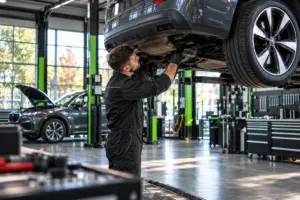
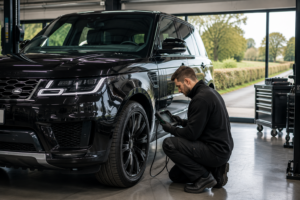
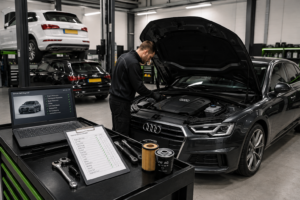
An EV service still involves a full health check of the car, but the balance of what gets inspected shifts considerably. Here’s what a technician is actually looking at.
Tyres
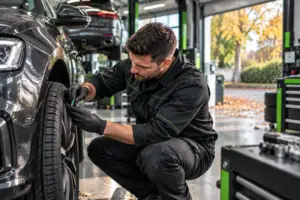
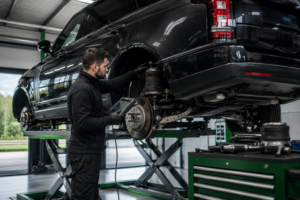
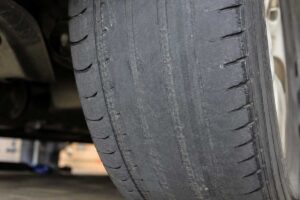
Electric cars are heavier than their petrol equivalents, thanks to the battery pack, and they deliver instant torque from a standstill. Both factors mean tyres tend to wear faster and less evenly than on a comparable petrol or diesel model. Regular tread depth and pressure checks, and rotating tyres where appropriate, are one of the most important parts of any EV service.
Brakes and regenerative braking wear patterns
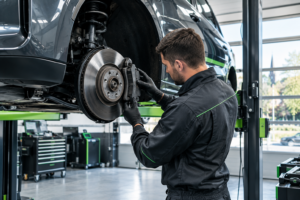
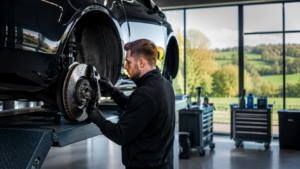
Most EVs use regenerative braking, which slows the car by feeding energy back into the battery rather than relying purely on the friction brakes. That means physical brake pads and discs often last considerably longer than on a petrol car, since they’re doing less of the work. The trade-off is that brakes used less often can corrode or seize slightly from lack of use, so a technician needs to check for that rather than just for wear.
Cabin filter
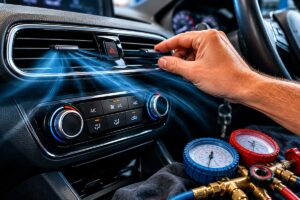
The cabin filter on an EV works exactly as it does on any other car, cleaning the air that comes into the cabin through the heating and ventilation system. It still needs replacing periodically, regardless of what’s under the bonnet, or under the boot floor, on many EVs.
Coolant and thermal management systems
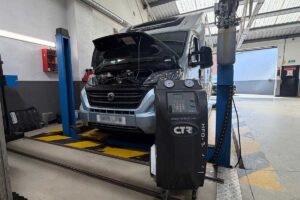
This is one of the biggest differences. EVs use a coolant system to manage the temperature of the battery pack, motor and power electronics, keeping everything within the range it needs to perform safely and efficiently. That coolant needs checking and, at the right interval, replacing, a job most drivers assume doesn’t exist on a car without an engine.
Software and firmware updates
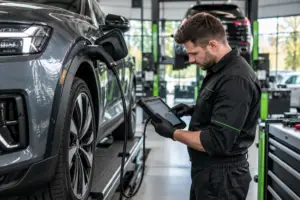
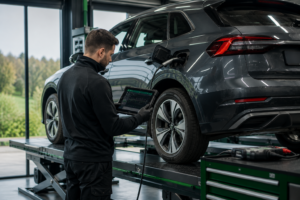
A modern EV runs on software as much as hardware, controlling everything from battery management to charging behaviour. Manufacturers issue updates that can affect range, charging speed and safety systems, and a service is a natural point to confirm the car is running the latest version. Verify which updates can be applied by an independent garage versus a main dealer, per manufacturer.
12V battery
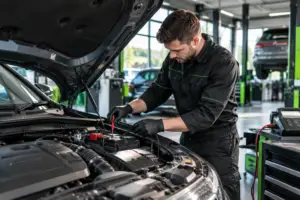
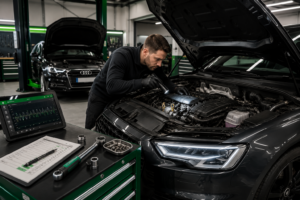
Even a fully electric car still runs a conventional 12V battery, separate from the main traction battery, to power things like lights, infotainment and the systems that wake the car up before the main battery takes over. It ages the same way a 12V battery in a petrol car does, and a flat 12V battery is one of the most common reasons an EV won’t start.
Brake fluid
Brake fluid absorbs moisture over time regardless of what powers the car, which affects braking performance and needs testing and replacing at the correct interval. This is easy to overlook on an EV precisely because so much else about the brakes has changed.
What Does an Electric Car No Longer Need?
The flip side of the list above is just as useful to know, because it explains why some EV owners are surprised by how short their service checklist looks compared to their old car. There’s no engine oil or oil filter to change, no spark plugs, no cambelt or timing chain, no clutch, and typically no exhaust system to inspect for corrosion or emissions.
That doesn’t make servicing optional, or cheaper by default. The jobs that remain, covering tyres, brakes, coolant, software and the 12V battery, still take skill and the right equipment to do properly. It simply means the visit is structured differently, with more time spent on diagnostics and electrical systems than on the mechanical jobs that used to dominate a petrol service.
Can an Independent Garage Service an Electric Car?
Yes. Servicing an EV doesn’t need to happen at a main dealer, and it doesn’t have to cost dealer-level prices, provided the garage has invested in the right training, diagnostic equipment and high-voltage safety certification. That’s exactly the setup we’ve built at CSG Automotive for drivers across Macclesfield, Wilmslow, Alderley Edge, Knutsford, Congleton and the wider Cheshire area.
Using an independent garage for EV servicing generally doesn’t affect your manufacturer warranty either, as long as the work is carried out to the manufacturer’s schedule, using appropriate parts, by someone qualified to work on high-voltage systems. That’s worth knowing if you’ve been told, or have simply assumed, that an EV has to go back to the dealer for every visit.
What Happens If You Skip a Service on an EV?
Missing a service on an electric car doesn’t tend to cause the dramatic, sudden failures people associate with ignoring a petrol engine, but the risks are still real. Tyres wearing unevenly without being caught can affect handling and range, uninspected brakes can seize from lack of use, and a coolant system that’s never checked can leave the battery running hotter than it should under load.
There’s also the warranty question again. A missed or undocumented service can be used to challenge a warranty claim later, even for something unrelated to the part that wasn’t checked. A brief, properly recorded EV health check is a small job that protects a genuinely expensive asset.
Frequently Asked Questions
Do electric cars need less servicing than petrol cars?
In terms of the number of moving parts involved, yes, since there’s no oil change, spark plugs, clutch or cambelt to think about. But EVs still need regular attention to tyres, brakes, coolant systems, software and the 12V battery, so less mechanical work doesn’t mean no servicing required.
How much does it cost to service an electric car?
Costs vary by make, model and what the service includes, so it isn’t something we’d put a figure on without checking your specific car. As a general pattern, EV servicing is often comparable to, or slightly less than, servicing an equivalent petrol or diesel car, because there are fewer consumable parts involved.
Can I get my electric car serviced at an independent garage instead of a main dealer?
Yes, provided the garage has the right training, diagnostic tools and high-voltage safety qualifications to work on EVs safely. CSG Automotive services electric and hybrid vehicles for drivers across Macclesfield and the surrounding Cheshire towns, and using an independent garage doesn’t automatically affect your manufacturer warranty.
Do EV brakes wear out slower than on a petrol car?
Generally yes, because regenerative braking does much of the work of slowing the car, so the physical brake pads and discs see less use. That doesn’t mean they can be ignored, since brakes used infrequently can corrode or bind, so they still need checking as part of a service.
Does an electric car need its coolant changed?
Yes. EVs use a coolant system to manage the temperature of the battery pack, motor and electronics, and that coolant needs to be checked and replaced at the correct interval to keep those systems working safely and efficiently.
What’s included in an EV health check at CSG Automotive?
An EV health check typically covers tyres, brakes, the cabin filter, coolant levels, the 12V battery, brake fluid condition and a check for outstanding software updates, alongside a general inspection of the car.
Booking an EV or Hybrid Health Check
Electric and hybrid cars still need looking after, just not in the way a lot of drivers expect when they make the switch. If you’re not sure what your car is due for, or you simply want peace of mind before a long trip, CSG Automotive’s team can run through an EV or hybrid health check and tell you plainly what does and doesn’t need attention. Get in touch to book yours in, wherever you are across Macclesfield and the surrounding Cheshire area.