Cheshire’s winters have a habit of turning nasty fast, with ice forming on rural lanes long after the sun has cleared the frost from the main roads, and fog settling over the flatter ground around the Weaver and Bollin valleys. A car that has been running fine since spring can let you down the moment temperatures drop, often at the worst possible moment on a dark commute into work or the school run.
A solid winter car checklist covers five essentials: tyre tread and pressure, battery health, coolant strength, working lights, and screenwash rated to at least minus fifteen degrees. Check each of these before the first proper cold snap, keep a basic emergency kit in the boot, and book a health check if your car is showing any warning lights or is over three years old.
Why a Winter Car Checklist Matters in Cheshire
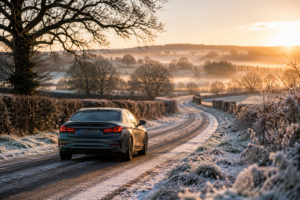
Cheshire covers a lot of ground between the Peak District fringe near Macclesfield and the flatter arable land around the Cheshire Plain, and each brings its own winter hazard. Moorland routes such as the Cat and Fiddle above Macclesfield are notorious for early snow and ice, while the low-lying land around Northwich and Middlewich is prone to thick fog once temperatures fall.
Rural lanes connecting Nantwich, Sandbach and Congleton often see black ice linger in shaded dips long after gritted A-roads are clear. A winter car checklist matters here because a fault that would be a minor inconvenience in town can become genuinely dangerous on an unlit, untreated lane between villages.
Older vehicles feel this more than newer ones. A battery, set of tyres or set of wiper blades that just about coped through a mild summer often has little reserve left when the temperature drops and the car is working harder to start, grip and see. A proper pre-winter check catches this gap before it turns into a roadside call-out.
What Should Be on Your Winter Car Checklist?
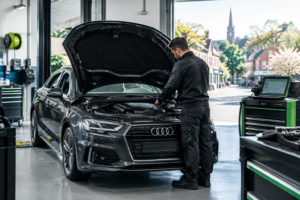
The core of any winter car checklist is mechanical rather than glamorous: tyres, battery, coolant, lights and screenwash. Working through each of these methodically takes less than half an hour and catches most of the faults that lead to winter breakdowns.
Tyres
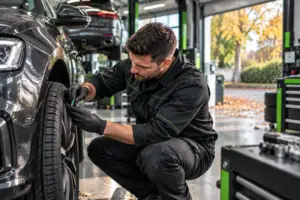
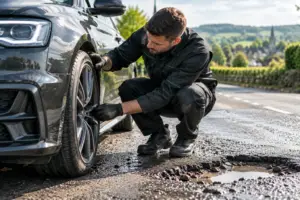
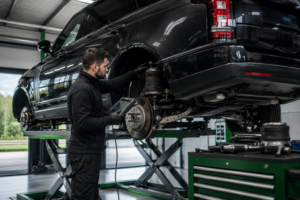
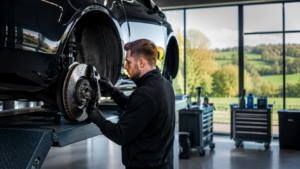
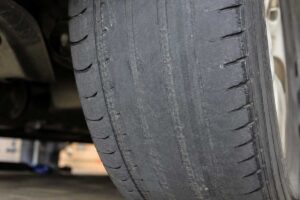
Tyre grip drops noticeably in cold, wet conditions, so check tread depth across the full width of each tyre, not just the centre. The legal minimum in the UK is 1.6mm, but many tyre manufacturers recommend considering replacement nearer 3mm for winter driving, since stopping distances lengthen sharply as tread wears down. Check pressures too, as cold air causes them to drop, and an underinflated tyre handles worse on icy or wet Cheshire lanes. While you are down there, look over the sidewalls for cracking or bulges, since Cheshire’s pothole-scarred rural roads can hide damage that only shows up once cold weather stiffens the rubber.
Battery
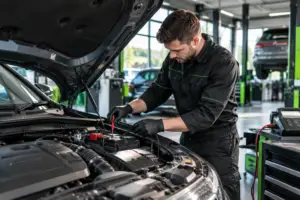
Cold weather is the single biggest cause of battery-related breakdowns, because low temperatures reduce a battery’s ability to deliver current just as the engine needs more power to start. If your battery is getting on in years, has struggled to start the car on a cold morning, or your dashboard has flagged a charging fault, get it tested before the cold sets in rather than after it lets you down. A proper load test tells you far more than listening for a slow crank and hoping for the best.
Antifreeze and Coolant
Coolant does two jobs: it stops the engine overheating and stops the water in the cooling system freezing and cracking the block in cold weather. A standard mix is roughly fifty-fifty coolant to water, though the exact ratio depends on the vehicle, so check your handbook or ask a technician to test the concentration with a refractometer rather than guessing.
Lights
Shorter days mean more of your Cheshire driving happens in the dark, so every bulb needs to be working: headlights, sidelights, brake lights, indicators, fog lights and the number plate light. Check for cloudy or cracked lenses too, since these scatter light and reduce how far you can see and be seen on unlit lanes around Prestbury or Bollington.
Screenwash and Wipers
Plain water freezes in the reservoir and can crack the pump, so use a properly concentrated screenwash rated to at least minus fifteen degrees rather than diluting it down. Check your wiper blades for splitting or smearing at the same time, since a screen you cannot clear properly in freezing rain or road spray is a serious visibility risk.
Is Your Land Rover or Range Rover Ready for Winter?
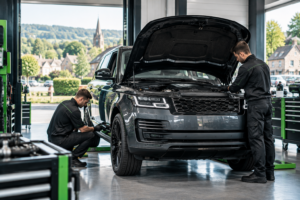
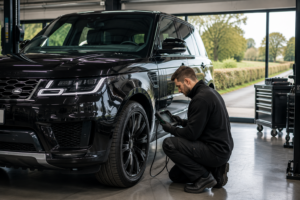
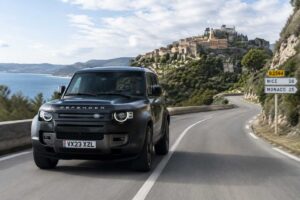
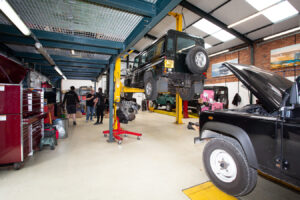
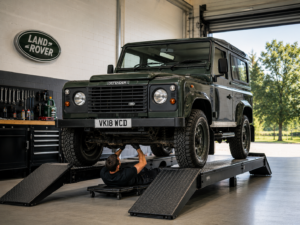
Land Rover and Range Rover models bring extra systems worth checking before winter that a general service might not cover in the same depth. Air suspension, terrain response settings and all-wheel-drive electronics all rely on sensors and software that benefit from a specialist look before conditions get demanding.
Short winter journeys can also be tough on diesel particulate filters, which need a sustained run at higher engine speed to regenerate properly, something stop-start school runs around Wilmslow or Alderley Edge rarely provide. If your Land Rover or Range Rover has thrown a warning light, feels less settled on rough surfaces, or you simply want peace of mind before winter, a specialist diagnostic check is worth booking ahead of the cold snaps rather than during one, particularly if you regularly cover the exposed moorland routes towards the Peak District.
What Should You Keep in Your Car for Cheshire Winters?
Beyond the mechanical checks, a few items in the boot make a real difference if you do get caught out on a rural stretch between Cheshire towns. An ice scraper and de-icer, a torch, a warm blanket, a phone charger and a hi-vis vest are the basics worth keeping year-round from autumn through to spring.
If you regularly drive moorland routes near Macclesfield, Congleton or the Cat and Fiddle, it is also worth carrying a small shovel, a warning triangle and some sturdy footwear, in case you need to walk a short distance after a breakdown. None of this replaces sorting the checklist above, but it turns a bad situation into a manageable one if the weather closes in faster than forecast.
How Cheshire’s Roads Make Winter Driving Different
Driving conditions across Cheshire vary more than the county’s flat reputation suggests. The higher ground towards Macclesfield, Bollington and the Peak District fringe holds snow and ice longer than the lower, more sheltered towns such as Nantwich, Middlewich and Sandbach, so a car that copes fine on one side of the county can struggle on the other.
Commuter routes into Altrincham, Wilmslow and Knutsford carry heavy early-morning traffic, which can mean standing in queues on untreated approach roads before gritters have been round. Meanwhile the flatter land near Northwich and Holmes Chapel is prone to river mist and fog that reduces visibility well before any frost is visible on the windscreen.
Adjusting your driving to match these conditions matters as much as the checklist itself: leaving extra following distance, easing off the accelerator on exposed bends, and slowing well before entering a dip where cold air and mist tend to collect. A vehicle prepared with fresh tyres, a reliable battery and working lights copes far better with this mix of conditions than one left unchecked since the last MOT.
Winter Car Checklist FAQs
How often should I check my car before winter? A full check of tyres, battery, coolant, lights and screenwash is worth doing once in autumn before the first cold snap, then a quick visual check of tyres and lights every few weeks through the winter months as conditions change.
What is the legal minimum tyre tread depth in the UK? The legal minimum tyre tread depth in the UK is 1.6mm across the central three-quarters of the tyre, around its full circumference, and driving below this can result in penalty points and a fine as well as reduced grip.
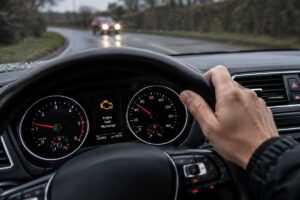
Can I keep driving my Land Rover with a warning light on in winter? It depends on the warning light, but any light that appears alongside reduced performance, unusual noises or warning messages about traction or suspension should be checked promptly, since cold weather can make an existing fault worse rather than better.
Do electric and hybrid cars need different winter checks? Electric and hybrid cars still need tyres, lights, screenwash and wiper checks like any other vehicle, but cold weather also reduces usable battery range, so it is worth checking tyre pressures and planning for shorter range on very cold days.
How cold does it need to be for screenwash to freeze? Plain water can freeze at zero degrees Celsius, so screenwash should be mixed to a concentration rated for temperatures well below what Cheshire typically sees in winter, generally minus fifteen degrees or colder, to avoid a frozen reservoir or pump.
Should I warm up my car before driving in winter? Modern engines do not need lengthy warming up while stationary, but a scraped, clear windscreen and a minute of gentle, low-revving driving to circulate oil properly is safer and kinder to the engine than setting off at full speed on a cold start.
Conclusion
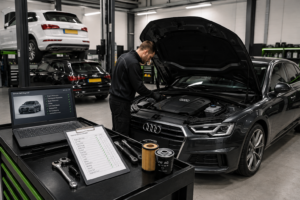
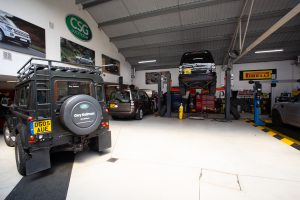
Getting your vehicle through a Cheshire winter comes down to sorting the basics before the weather forces the issue: tyres, battery, coolant, lights and screenwash, checked properly rather than glanced at. If you would rather leave it to someone who knows what to look for, CSG Automotive’s team in Macclesfield can run a full winter health check on your car, whatever the marque, and our Land Rover and Range Rover specialists are on hand for anything more involved. Get in touch to book your winter check before the next cold snap reaches Cheshire.