Around Macclesfield, October brings the first proper wet leaves, early dark evenings and roads that never quite dry out. Cheshire’s lanes and the A537 over towards the Peak District are lovely at this time of year, but they are also where a tired car shows its weak points.
What does autumn car care involve? Autumn car care means checking the parts that keep you in control on wet, leaf-covered roads: tyre tread and pressure, brakes, wipers, lights, battery, fluids and washer jets. Doing this early in October, before the weather turns properly, catches small faults before they become breakdowns or MOT failures.
Why Is Autumn So Hard on Your Car?
Autumn combines several problems at once. Rain is more frequent, daylight shortens, temperatures drop and the road surface itself changes. Wet leaves, mud from farm traffic and greasy road film all reduce the grip your tyres can find.
At the same time, your car’s weaker components are being asked to work harder. Wipers run for longer, headlights are on for the commute home, and the battery has to cope with lights, heater, demister and heated screen all at once. A component that scraped through summer can fail in the first cold, wet week.
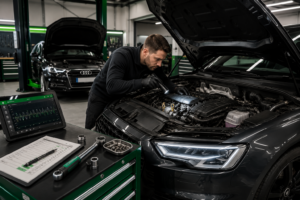
In our workshop here in Macclesfield, we tend to see the same patterns every October: tired wiper blades, tyres close to the legal limit, dim bulbs and batteries that struggle on the first chilly morning. Most of them are cheap and quick to put right if they are caught early.
Why Are Wet Leaves So Dangerous on the Road?
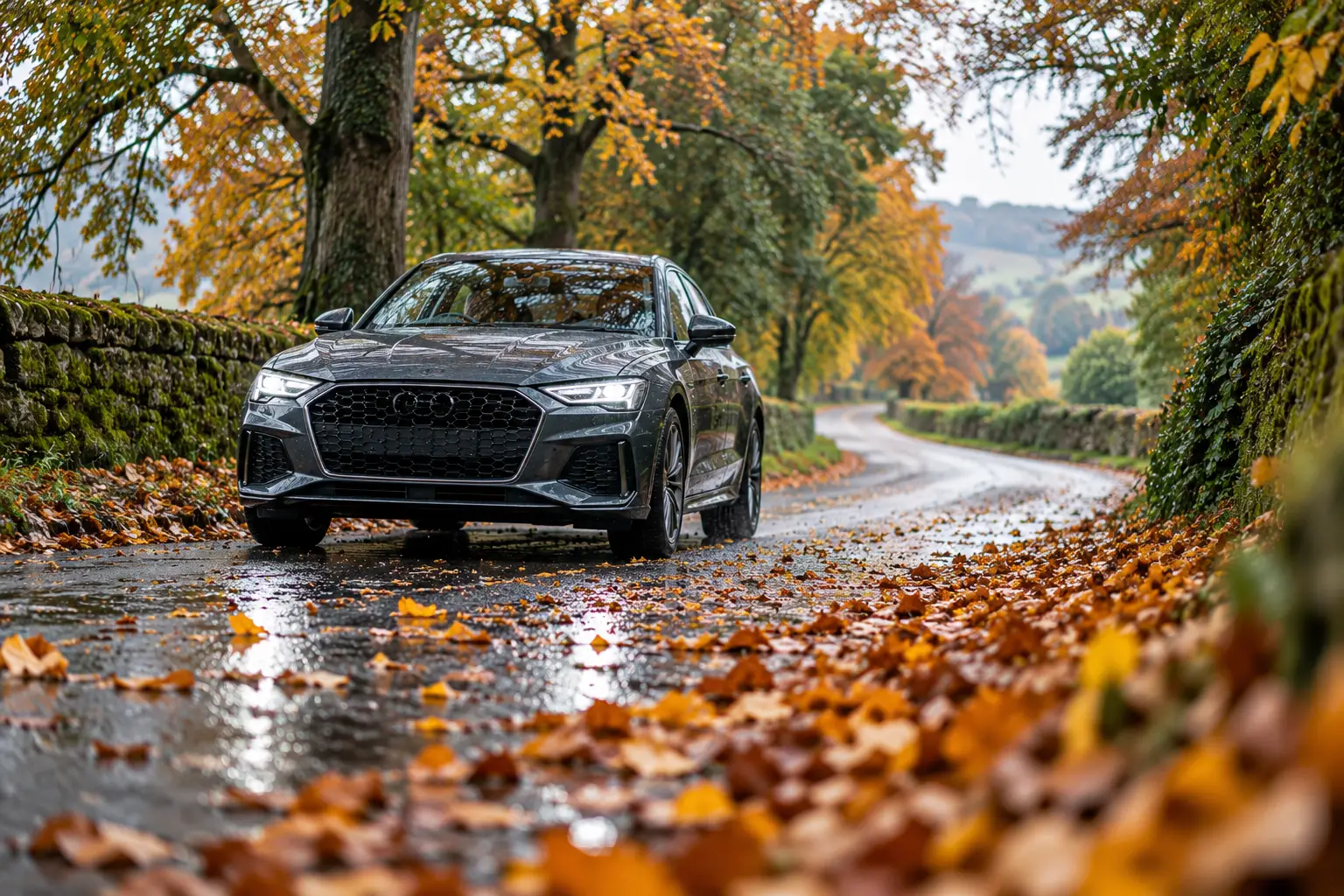
A layer of wet leaves behaves a bit like a film of grease between your tyres and the tarmac. Leaves compress into a slick paste, particularly under tree-lined roads that stay damp and shaded all day. You may not notice the slippery patch until you brake, turn or accelerate on it.
The effect is worst on corners, on downhill stretches and at junctions where cars brake repeatedly. Country lanes around Prestbury, Bollington and Wildboarclough are classic examples, where overhanging trees and little sunlight keep leaves wet well into the afternoon.
Leaves can also cause problems you cannot see. They can block the drain channels at the base of your windscreen, clog sunroof drains and collect in the scuttle panel under the bonnet. Blocked drains can send water into places it should never be, including the cabin and electrical components. A quick clear-out every week or two in leaf-fall season is a sensible habit.
How should you drive on leaf-covered roads?
Slow down earlier than you think you need to, and leave a bigger gap to the vehicle in front. Brake gently in a straight line before a corner, not during it, and avoid sudden steering movements. If the car begins to slide, ease off the accelerator smoothly rather than stamping on the brake.
What Should You Check on Your Car Before Winter?
This is the core of your autumn car care routine. Work through the following checks, ideally in the first few weeks of October. Many are simple enough to do yourself on a driveway; for the others, our technicians are happy to look them over.
Tyres
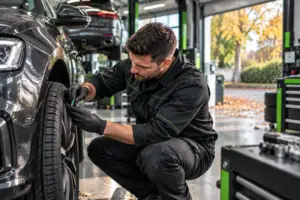
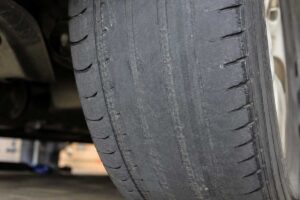
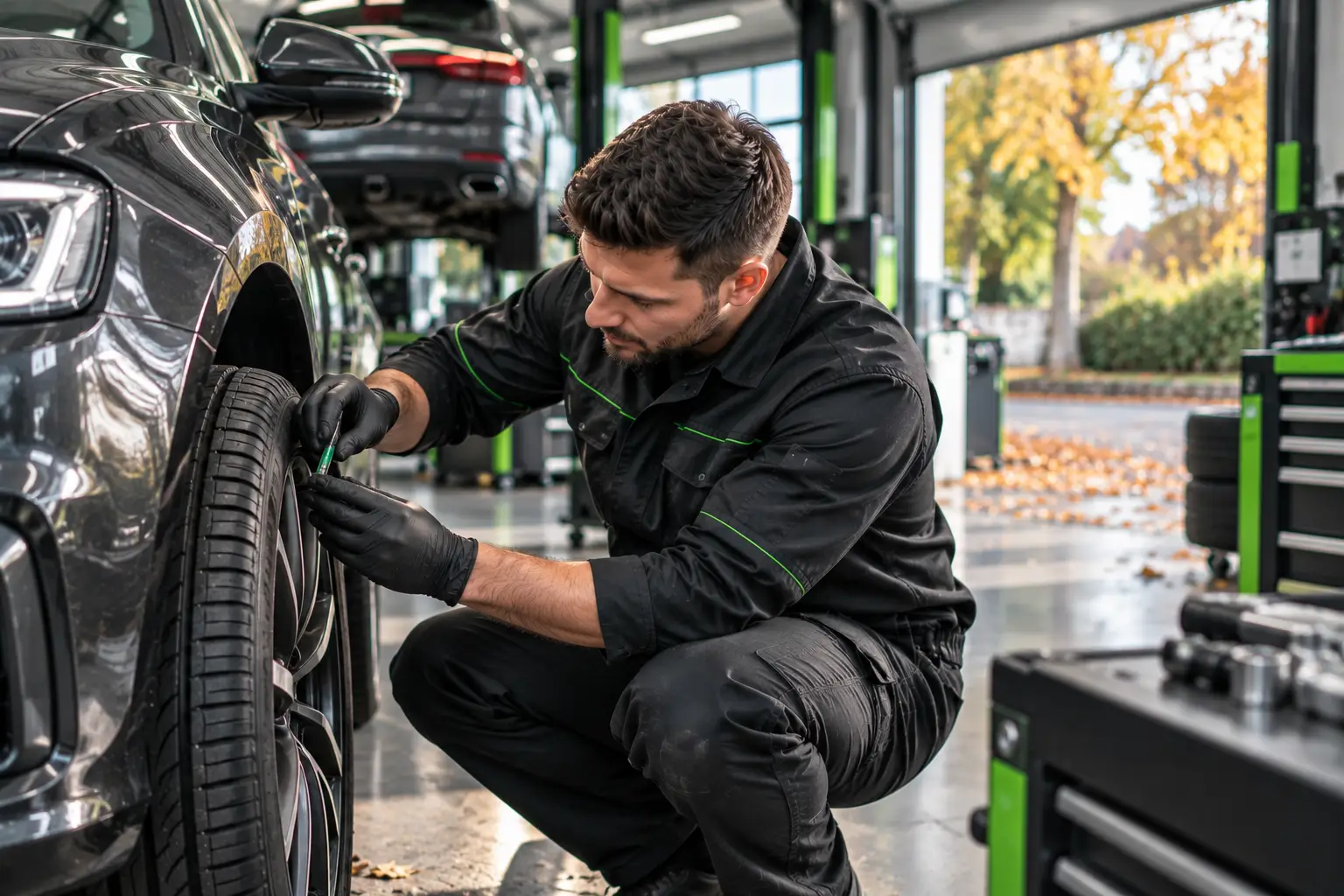
Tyres are the only thing connecting your car to a wet road, so they come first. The legal minimum tread depth for cars in the UK is 1.6mm across the central three-quarters of the tread, around the full circumference. We would suggest treating anything approaching that as due for replacement before winter, because wet-weather grip falls away well before the legal limit.
Check the following:
- Tread depth on all four tyres, using a gauge or the tread wear indicators
- Pressures, including the spare if you carry one, using the figures in your handbook or on the door pillar
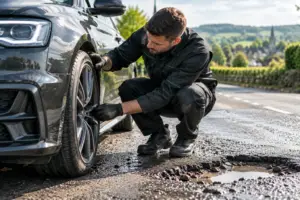
- Sidewalls for cracks, bulges or cuts, which often come from kerbs on narrow lanes
- Uneven wear, which can point to tracking or suspension problems
If your tyres are ageing, it is worth getting them looked at even if the tread seems fine.
Brakes
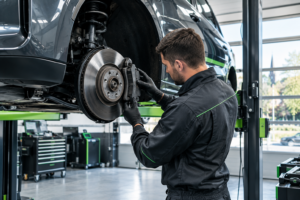
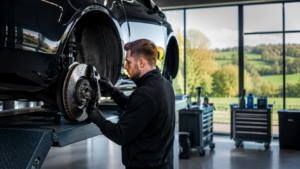
Wet roads mean longer stopping distances and heavier use of your brakes. Warning signs include squealing or grinding noises, a pull to one side under braking, a soft or spongy pedal, or vibration through the steering wheel or pedal.
Brake fluid absorbs moisture over time, which reduces its effectiveness. Your car’s service schedule will state how often it should be changed. If you cannot remember when it was last done, ask us to check it during your next visit.
Wipers and washers
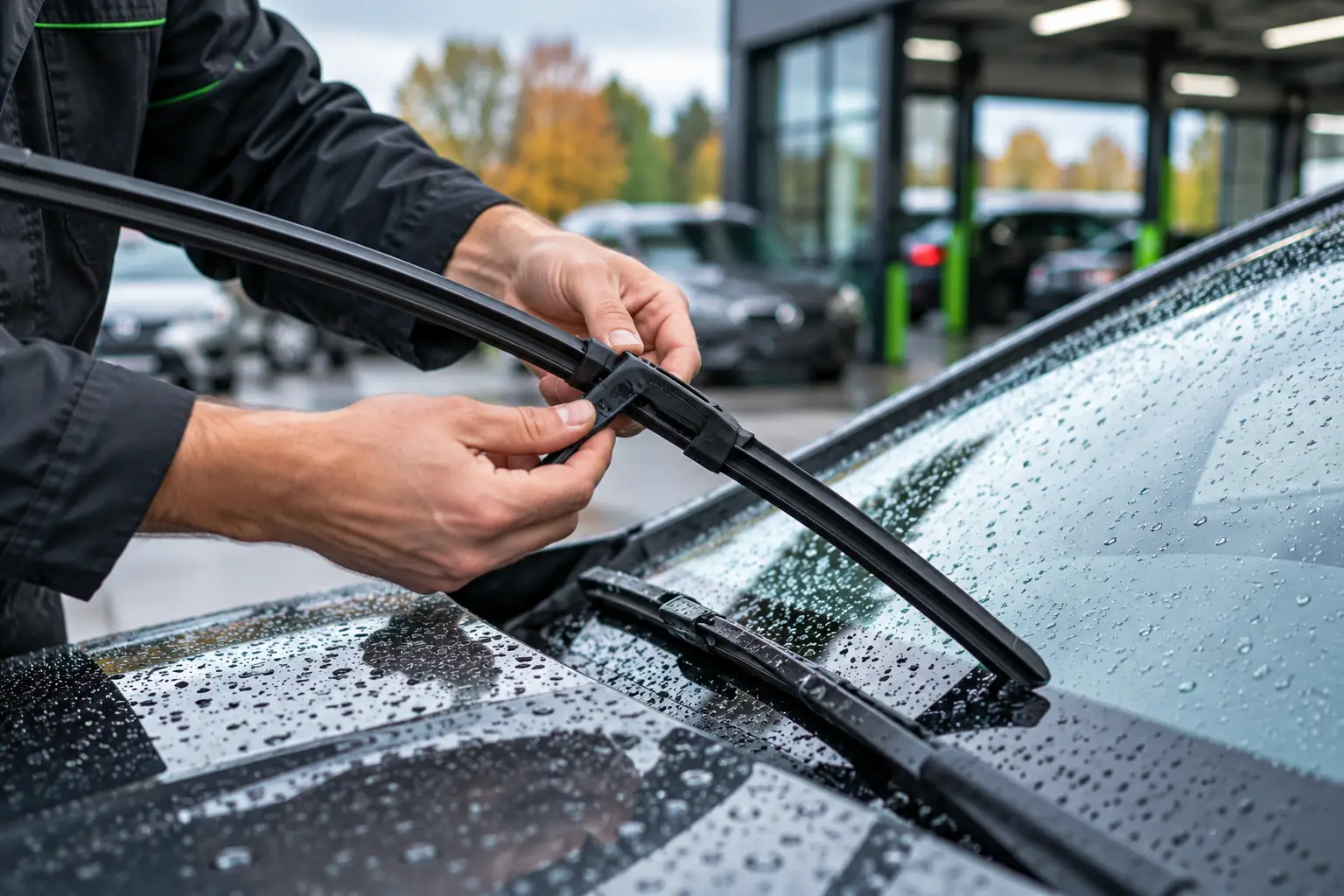
Worn wiper blades smear instead of clearing, and low sun on a wet autumn windscreen makes that glare far worse. Look for splits, hardened rubber, juddering or streaks. Replacing blades is one of the cheapest and most worthwhile jobs on the list.
Top up screenwash with a proper screenwash that has a suitable concentration for cold weather, and check the washer jets are aimed at the glass and not blocked. Clean the inside of the windscreen too, because the film that builds up there causes misting and glare.
Lights
With darker evenings, you will rely on your lights more. Walk around the car with someone to check dipped beam, main beam, sidelights, brake lights, indicators, fog lights and reversing lights. Dim or yellowing headlight lenses reduce how far you can see, and a failed bulb is a common MOT failure item as well as a safety risk.
Battery
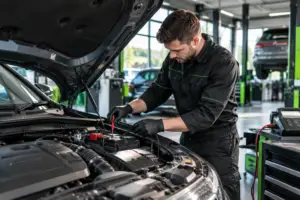
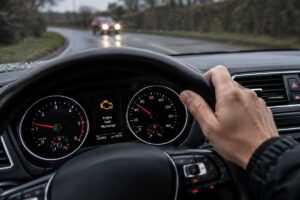
Cold, damp mornings are when weak batteries give up. Warning signs include slow cranking, dimming lights when the engine starts, a battery warning light, or a battery that is more than a few years old. A simple battery and charging system test takes little time and can save you a no-start on a dark morning. You can read more about this in our guide to why your car won’t start on cold mornings.
Fluids and coolant
Check engine oil, coolant, brake fluid and screenwash levels. Coolant needs to contain the right amount of antifreeze for the temperature drop ahead, so it is worth having the mixture tested rather than simply topping up with water.
Heater, demister and air conditioning
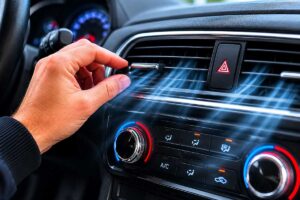
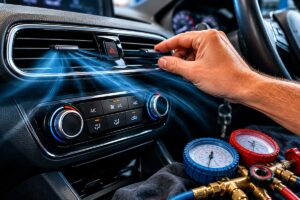
Misted windows slow you down and cost you visibility. Check the heater, rear screen heater and demister all work properly, and run the air conditioning from time to time, as it dries the air in the cabin and clears the screen faster.
Does Your Car Need Anything Special for Wet Roads?
Mostly it needs the basics done properly, but a few extras are worth considering.
Should you consider all-season or winter tyres?
Cheshire does not usually see long spells of deep snow in the towns, but the roads up toward the Peak District can be a different story. If you regularly drive hilly or exposed routes, ask us whether all-season or winter tyres suit how you use your car. They are not necessary for everyone, and the right answer depends on your car, your routes and your budget.
What about four-wheel-drive and Land Rover owners?
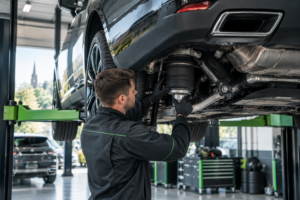
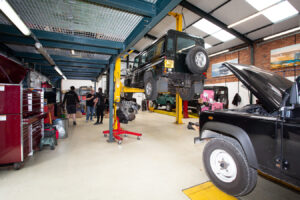
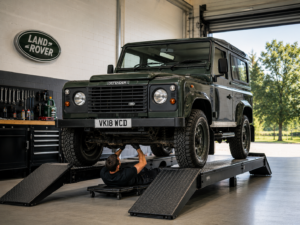
Four-wheel drive helps you get moving in slippery conditions, but it does not help you stop any faster. As specialists in Land Rover and Range Rover servicing as well as other makes, we remind owners that tyres, brakes and a correctly maintained transmission and suspension matter just as much on a heavy off-roader as on a small hatchback. Air suspension, in particular, is worth a check before winter if your vehicle has it.
Is your emergency kit ready?
A short kit in the boot makes a breakdown on a cold, wet evening far less miserable. We would suggest:
- A torch and spare batteries
- A high-visibility jacket and warning triangle
- A phone charger or power bank
- A blanket and warm clothing
- A small ice scraper and de-icer, ready for the first frost
- Your breakdown cover number, saved in your phone
How Often Should You Have Your Car Checked in Autumn?
At minimum, do a quick visual and pressure check monthly through autumn and winter, and a more thorough check before the clocks go back. If your car is due a service or MOT, the autumn is a very good time to book it, because the technician will already be looking at most of the items above.
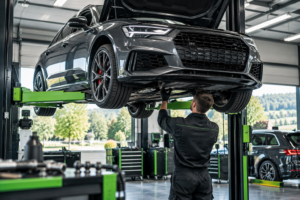
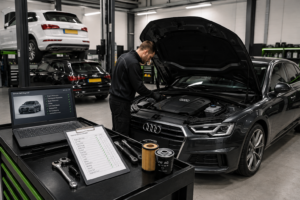
If you do not have the time or confidence to carry out the checks yourself, an inspection at a garage gives you a written list of anything that needs attention, in order of priority. You then decide what is done now and what can wait.
Frequently Asked Questions
What is the legal minimum tyre tread depth in the UK?
The legal minimum tread depth for cars in the UK is 1.6mm across the central three-quarters of the tyre, around its whole circumference. However, grip on wet roads reduces well before that point, so many drivers choose to replace tyres earlier, particularly before autumn and winter.
How do I stay safe driving on wet leaves?
Reduce your speed, increase the gap to the car ahead and brake gently and in a straight line before bends. Avoid sudden steering or acceleration, because wet leaves can behave like ice patches. Make sure your tyres and brakes are in good condition before leaf-fall begins.
When should I change my wiper blades?
Change your wiper blades when they smear, judder, squeak or leave unwiped areas on the screen. Rubber hardens and splits with age and sun exposure, so many drivers replace them every year, ideally at the start of autumn before the wet weather arrives.
Can fallen leaves damage my car?
Yes. Wet leaves can block the scuttle and windscreen drains, which may allow water into the cabin or electrical parts. They can also trap moisture against paintwork and collect around the underside of the car. Clearing leaves regularly from the bonnet, scuttle and sunroof drains helps prevent these problems.
Why does my car struggle to start in autumn?
Cooler, damp conditions put extra demand on the battery, and an older or weakened battery may no longer manage. Slow cranking, dim lights and a battery warning light are common signs. A battery and charging system test can tell you whether it needs replacing before it leaves you stranded.
Get Your Car Ready With CSG Automotive
Autumn car care is mostly about small, sensible jobs done before the weather forces the issue. Tyres, brakes, wipers, lights and the battery cover most of what matters, and a bit of attention now makes the months ahead easier and safer.
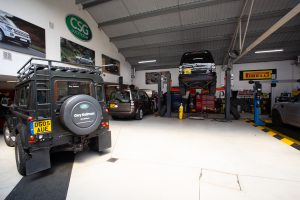
If you would like a professional second opinion, the team at CSG Automotive in Macclesfield is happy to check your car over, whether it is a Land Rover, a Range Rover or any other make. Get in touch to book your car in, and we will tell you plainly what needs doing and what can wait.