You press the brake pedal and it travels further than it used to, or it feels spongy underfoot instead of firm. It is one of the most common brake complaints we hear at our Macclesfield garage, and it is never one to ignore.
A brake pedal feels soft when something stops the hydraulic system from transferring pressure properly. The usual causes are air in the brake lines, old or moisture-contaminated brake fluid, a fluid leak, a failing flexible hose or a worn master cylinder. A soft pedal reduces braking confidence, so have it inspected promptly.
Below, we explain what is actually going on behind the pedal, the causes we find most often at CSG Automotive, what you can safely check yourself, and when to stop driving and call us.
What does it mean when your brake pedal feels soft?
Your brakes work hydraulically. When you press the pedal, you push a piston in the master cylinder, which sends brake fluid through steel pipes and flexible hoses to the calipers (or wheel cylinders on some older drum brakes). That fluid pressure clamps the pads against the discs and slows the car.
Liquid does not compress, which is why a healthy pedal feels firm and gives you a consistent, predictable response. Air, however, does compress. Anything that lets air into the system, lets fluid escape or weakens a component in the chain will change how the pedal feels.
A soft pedal usually shows up in one of three ways:
- Spongy: the pedal feels cushioned or springy, as if pressing into a sponge.
- Long travel: the pedal sinks further towards the floor than it used to before the brakes bite.
- Slowly sinking: under steady pressure, such as waiting at traffic lights, the pedal gradually creeps towards the floor.
The way it feels helps our technicians narrow down the cause.
Why does my brake pedal feel spongy? The most common causes
Air in the brake lines
Air is the classic cause of a spongy pedal. It can get into the system after brake work that was not bled correctly, when the fluid level in the reservoir has dropped too low, or through a tiny leak that draws air in as the fluid cools.
Because air compresses, some of your foot’s force goes into squeezing bubbles instead of moving the pads. The fix is usually a proper brake bleed, but we always look for why the air got in.
Old or contaminated brake fluid
Brake fluid absorbs moisture from the air over time. That water lowers the fluid’s boiling point, and under heavy braking the fluid can heat up enough to form vapour bubbles. The pedal then feels soft or fades, often on long descents or after repeated hard stops.
Old fluid also encourages internal corrosion in calipers, pipes and ABS components. Manufacturers set their own replacement intervals, so check your handbook or service schedule.
A brake fluid leak
If fluid is escaping, there is less of it to transmit pressure, and the pedal will sink or feel soft. Leaks can occur at a corroded brake pipe, a worn caliper seal, a wheel cylinder, a pipe union or the master cylinder itself.
Signs include a reservoir that keeps dropping, damp patches on the inside of a wheel, or fluid marks on the ground where you park. A falling fluid level should always be investigated rather than topped up and forgotten.
Perished or swollen flexible brake hoses
The rubber hoses that connect the rigid brake pipes to each caliper flex every time you steer and drive over bumps. With age they can crack, leak or swell internally. An internally damaged hose can act like a one-way valve or balloon slightly under pressure, which gives a soft or inconsistent pedal without any obvious external leak.
We check hose condition during every brake inspection.
A worn master cylinder
The master cylinder contains seals that eventually wear. When they do, fluid can bypass the piston internally rather than being pushed out to the brakes. The classic symptom is a pedal that slowly sinks to the floor under steady pressure, even though there is no visible leak anywhere.
Worn pads and discs
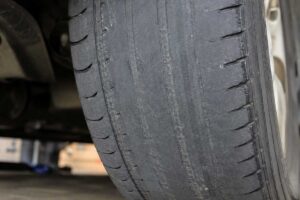
Very worn pads and discs can also increase pedal travel because the pistons have to extend further. This is more likely to feel like long travel than a sponge, but wear and fluid problems often appear together.
If your pads are close to the end of their life, our technicians will check them alongside the hydraulic system.
Is it safe to drive with a soft brake pedal?
In short, no, not for any longer than it takes to get the car somewhere safe or to a garage. A soft pedal means the system is not working as designed, and the problem can get worse without warning. Air or a leak that gives a slightly spongy pedal today can become a pedal that goes to the floor tomorrow.
Stop driving and seek help if:
- The pedal sinks to the floor, or you have to pump it to get a response.
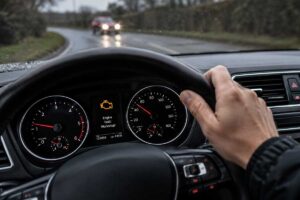
- The brake warning light comes on.
- You can smell something hot or acrid around the wheels after driving.
- The brake fluid level in the reservoir is low or dropping.
- The car pulls sharply to one side under braking.
If any of this applies, do not carry on driving. We would rather you arranged recovery than took a chance with your brakes.
What can you safely check yourself?
You do not need tools for a few sensible checks, and the answers help us enormously when you call.
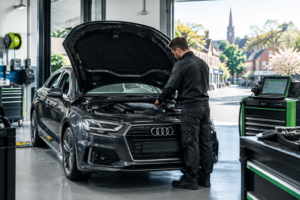
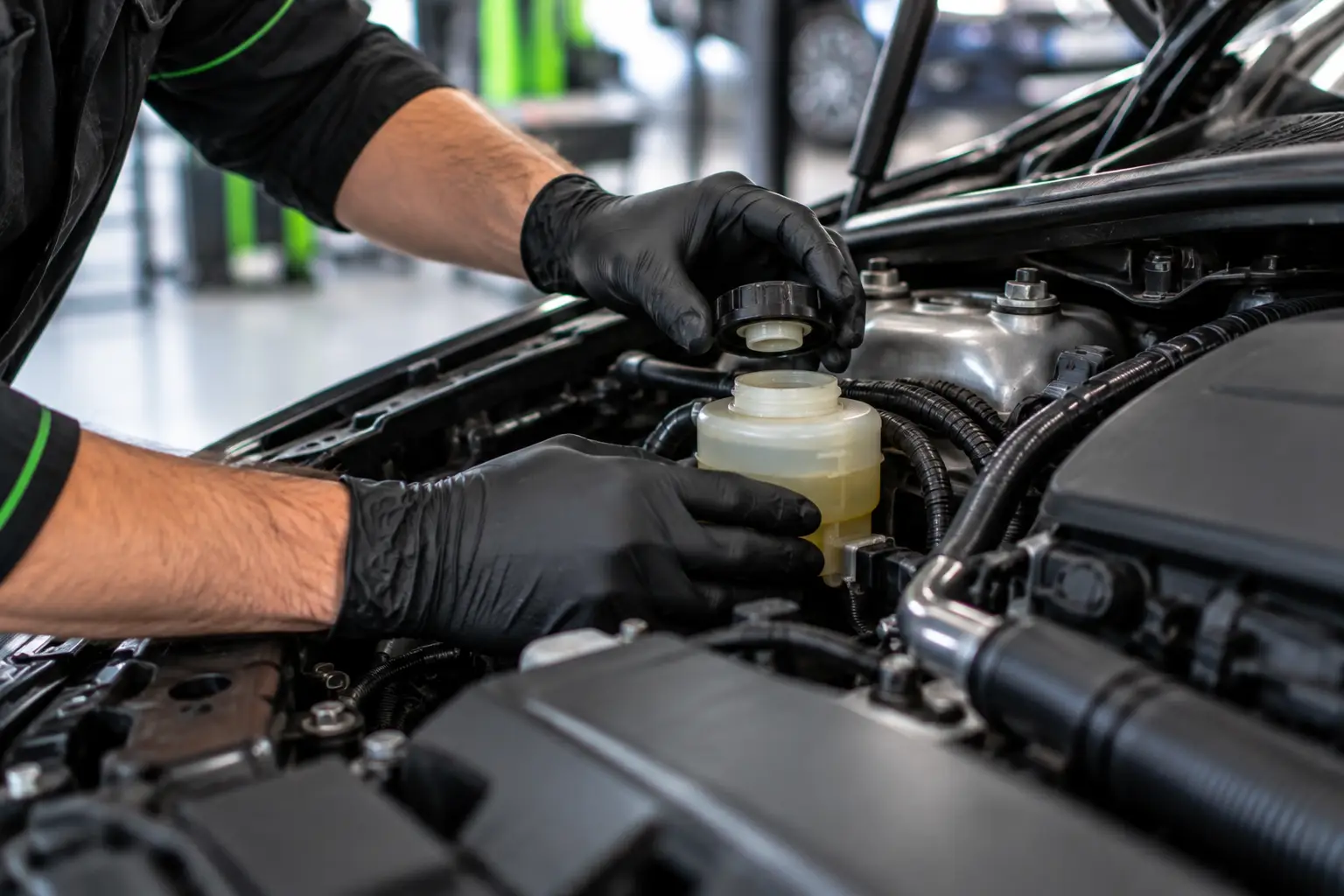
- Check the brake fluid level. With the car parked on level ground, look at the translucent reservoir under the bonnet. The level should sit between the minimum and maximum marks. Do not open and top up unless you know the correct fluid specification for your car, because the wrong type can cause damage.
- Look for leaks. Check the ground where you park and the inside faces of your wheels for oily dampness.
- Test the pedal at rest. With the engine off, press the pedal several times to clear any vacuum from the servo, then hold gentle, steady pressure. It should stay firm. Now start the engine; the pedal should sink slightly and then hold. If it keeps sinking, tell us.
- Note when it happens. Does it happen first thing, after a long drive, only when hot, or all the time? Does it improve when you pump the pedal? Pumping that improves the pedal often points to air in the system.
Please do not attempt to bleed the brakes or loosen any brake components at home unless you are trained to do so.
How do we diagnose a soft brake pedal at CSG Automotive?
When a car comes into our workshop with a soft pedal, we do not just bleed the brakes and hope. Bleeding without finding the cause can mask a leak or worn component, which then returns.
Our technicians typically work through the following:
- Road test and pedal assessment: we feel how the pedal behaves, its height, travel and whether it sinks under pressure.
- Fluid check: we inspect level, colour and condition, and where appropriate, test for moisture content.
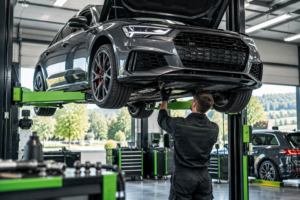
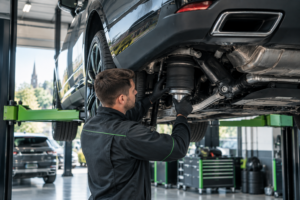
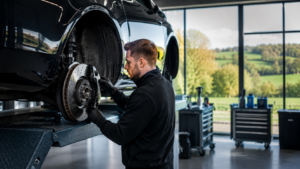
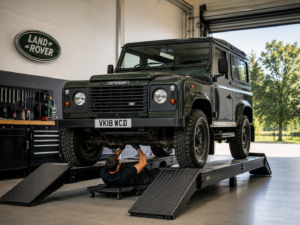
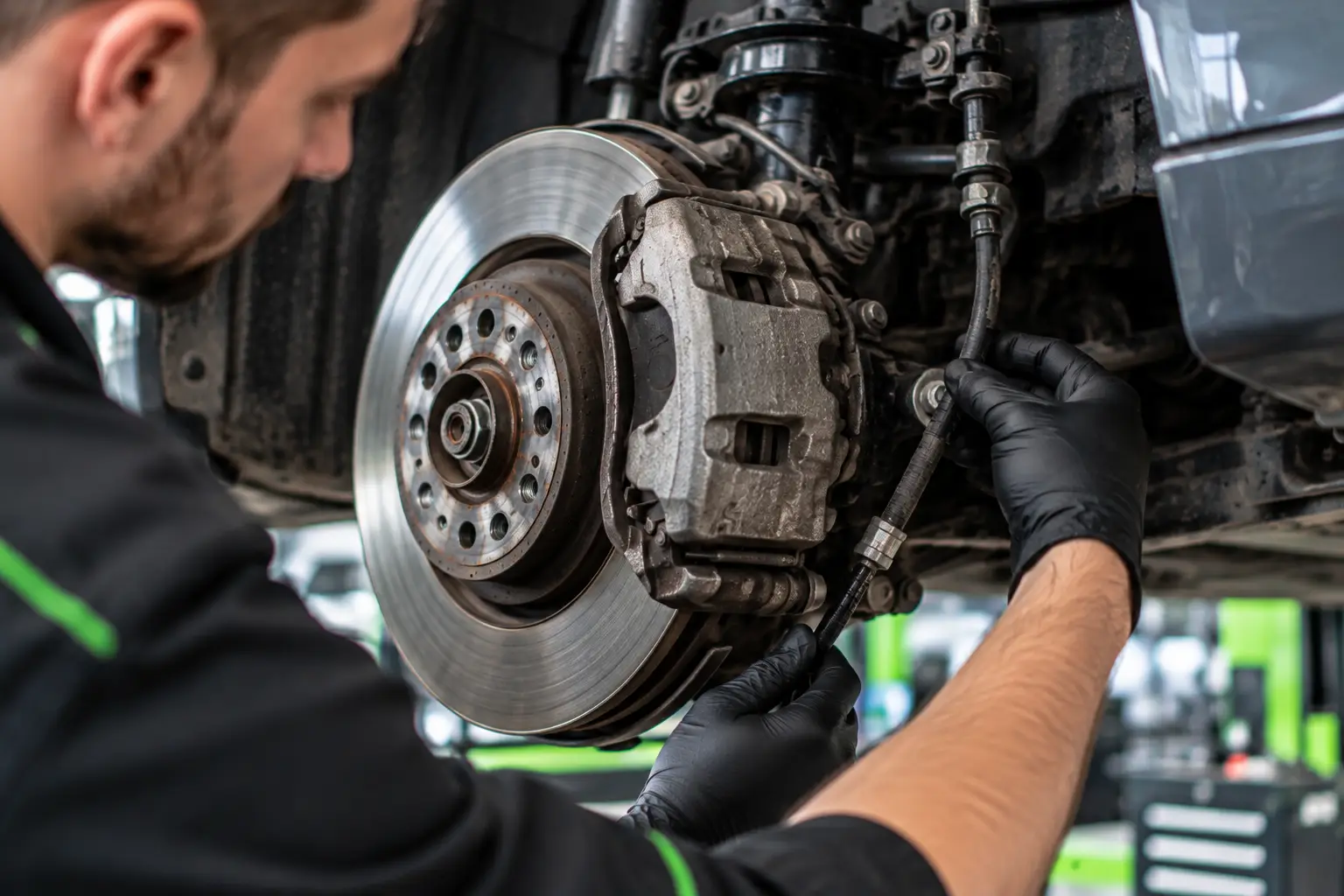
- Full visual inspection: with the car raised, we check pipes, hoses, unions, calipers and wheel cylinders for leaks, corrosion and damage.
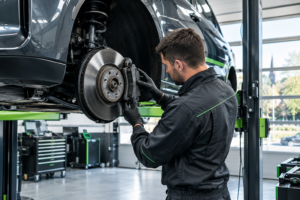
- Pad and disc check: we measure friction material and inspect the discs.
- Bleed and pressure test: once the cause is fixed, we bleed the system properly and confirm a firm, consistent pedal.
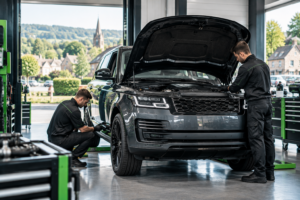
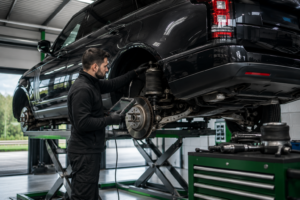
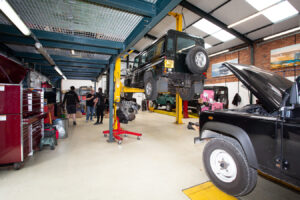
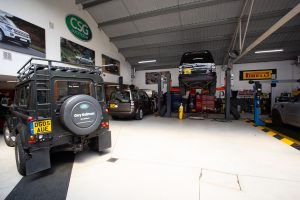
We work on a wide range of makes and models, including Land Rover and Range Rover, which have their own braking systems and quirks.
How is a soft brake pedal fixed?
The repair depends on the cause. Common outcomes include:
- Brake bleed and fluid change: for air in the system or old fluid, this restores a firm pedal.
- Hose, pipe or caliper replacement: where a leak or damaged component is found.
- Master cylinder replacement: if internal seals have failed.
- Pads and discs: where wear is contributing to long pedal travel.
We explain what we find and why before we carry out any work, so you can see what is needed and what is not.
Replacing brake fluid at the recommended interval is one of the simplest ways to prevent soft-pedal problems developing in the first place.
Frequently asked questions
Why does my brake pedal feel soft but my brakes still work?
A soft pedal means the hydraulic system is losing efficiency, even if the car still stops. Air, old fluid or a small leak can reduce pressure before the brakes fail outright. Because the problem can worsen without warning, a car with a soft pedal should be inspected as soon as possible.
Can I just top up the brake fluid to fix a soft pedal?
Topping up brake fluid rarely fixes the cause. A falling fluid level usually means worn pads or a leak, and either needs a proper inspection. Using the wrong fluid type can also damage seals. Have the system checked so the underlying fault is found rather than hidden.
Why does my brake pedal go to the floor slowly when I hold it?
A pedal that slowly sinks under steady pressure often points to an internal master cylinder fault or a leak somewhere in the system. It is a safety concern, so avoid driving the car and have it inspected by a qualified technician as soon as you can.
How often should brake fluid be changed?
Brake fluid should be changed at the interval set by your vehicle manufacturer, because it absorbs moisture over time. Check your service book or handbook for the schedule. Our technicians can test the fluid and advise during a service.
Does a soft brake pedal always mean air in the brakes?
No. Air is a common cause, but a soft pedal can also come from contaminated fluid, leaking seals, damaged hoses, worn pads or a failing master cylinder. Bleeding the brakes without finding the cause may only be a temporary fix, so a full inspection is worthwhile.
Book a brake check in Macclesfield
A soft brake pedal is your car telling you something has changed, and the earlier we look, the simpler and less costly the repair tends to be. If your pedal feels spongy, travels further than it used to, or sinks under pressure, please do not wait for it to get worse.
CSG Automotive is an independent garage in Macclesfield, Cheshire, working on a wide range of makes and models, including Land Rover and Range Rover. Get in touch to book a brake inspection and we will find the cause, explain it clearly and get you back on the road with a pedal you can trust.