
Most Audi owners never think about the timing chain until it makes a noise they can’t explain. By then, the repair bill can depend heavily on how quickly the car was looked at.
An Audi timing chain is at risk when you hear a rattle or scrape from the engine, particularly on a cold start, or when a fault code or warning light points to cam or crank timing. A worn chain, tensioner or guide can stretch or skip a tooth, so stop driving and get it inspected promptly.
At CSG Automotive in Macclesfield, our technicians see timing chain problems on Audis from all over Cheshire, and the pattern is usually the same: the signs were there for weeks before the failure. This guide explains what the chain does, what the warning signs sound and feel like, and what to do next.
What does an Audi timing chain actually do?
Inside your engine, the crankshaft turns the pistons and the camshafts open and close the valves. Those two have to stay perfectly in step. The timing chain is the link between them, and it runs on sprockets at both ends.
The chain does not work alone. It relies on a hydraulic tensioner that keeps it tight, plastic or metal guides that stop it whipping about, and engine oil to keep everything lubricated. Wear in any one of these parts can put the whole system out of tolerance.
Many people assume a chain is a fit-and-forget part, unlike a rubber cam belt that has a published replacement interval. That is a sensible starting point, but it is not the full picture. Chains can and do wear, stretch or lose their tensioner support, particularly on engines that have had oil changes stretched too far.
Which Audi engines are most often affected?
Timing chain concerns are not limited to one model, but certain engine families have a reputation among independent specialists. Some petrol TFSI engines from the late 2000s and early 2010s are well known for tensioner and chain wear.
Diesel TDI and V6 engines can also develop chain-related faults, often tied to oil condition and mileage rather than a single design flaw.
What are the warning signs of a failing Audi timing chain?
The signs tend to start small. Knowing what to listen and look for gives you the best chance of catching a problem early.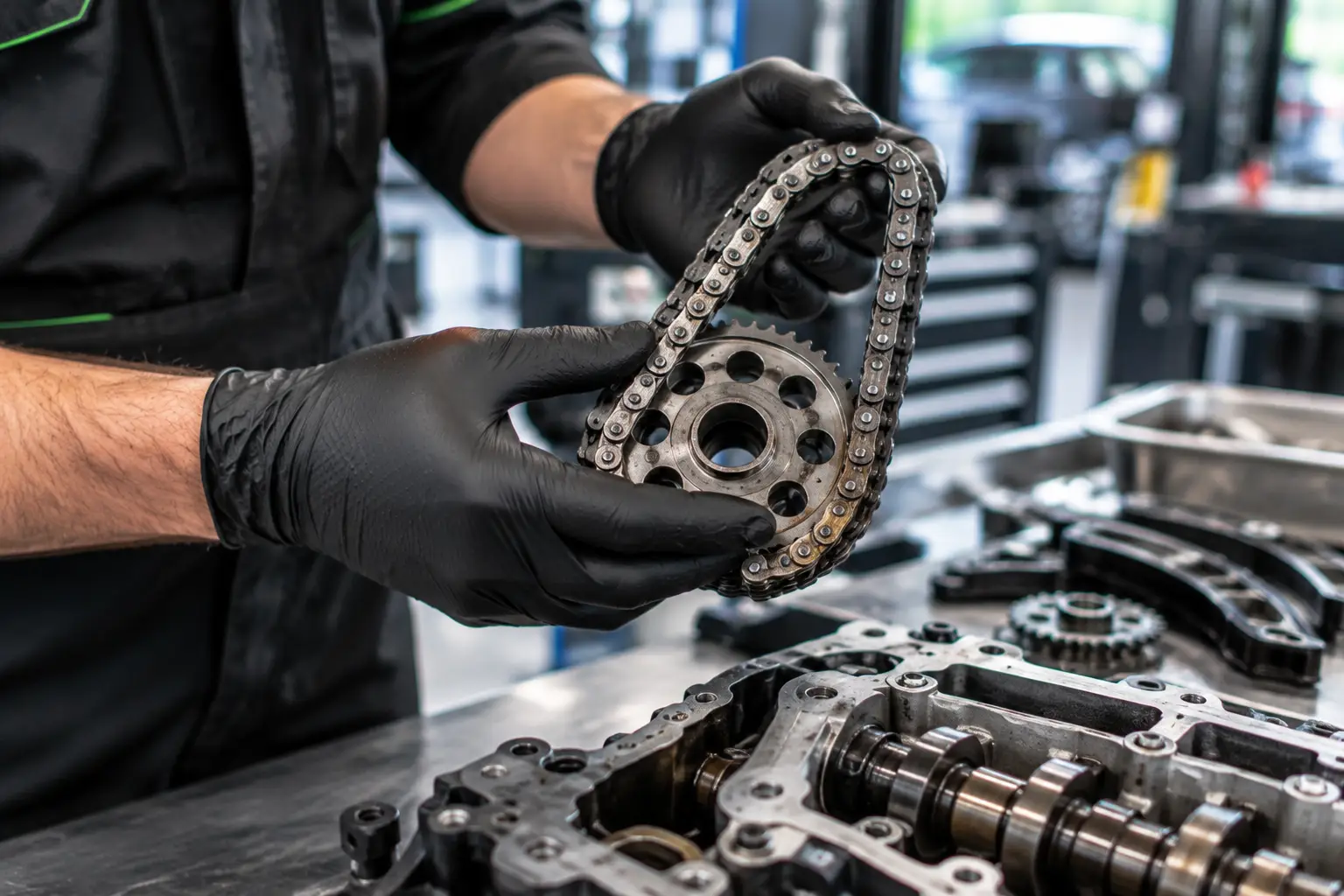
A rattle or scraping noise on cold start
This is the classic symptom. When the engine has been standing, oil pressure takes a moment to build and fill the tensioner. If the tensioner is weak or the chain has stretched, you get a brief rattle, rasp or chain-slap noise for a few seconds after start-up, which often fades as the engine warms.
It is easy to dismiss because it goes away. Please do not. A noise that only lasts a few seconds is exactly how early chain wear presents.
Rattling at idle or on deceleration
As wear progresses, the noise can stay with you beyond the first few seconds. Some owners hear a metallic rattle at idle, or a rattling that changes as they lift off the accelerator. This suggests the chain is moving more than it should.
Engine warning light or fault codes
Modern Audis monitor camshaft and crankshaft position closely. If the chain stretches, the timing between the two drifts and the engine control unit may log a correlation or timing fault, and the engine management light can come on.
Codes alone do not prove a chain fault, because sensors and oil control valves can cause similar codes. That is why diagnosis matters before anyone starts quoting for a big repair.
Rough running, hesitation or loss of power
When the valve timing is off, the engine can run unevenly. You might notice a rough idle, poor throttle response, hesitation, or the car feeling flat compared with how it used to drive. Fuel economy can also suffer.
Difficulty starting
A chain that has jumped a tooth can make the engine hard to start, or stop it starting at all. If your Audi cranks but will not fire after a rattling noise, switch off and do not keep trying.
Metal debris in the oil
Sometimes the first evidence is found during a service. Fine metal particles in the oil, or on the drain plug or filter, can point to wear inside the engine, including the timing components. This is one reason regular servicing with a proper inspection is worth having.
Why do Audi timing chains fail?
There is rarely a single cause. In our experience the most common contributors are these:
- Old or low-quality oil. The tensioner is hydraulic, so it depends on clean oil at the right pressure. Overdue oil changes accelerate wear on the chain, guides and tensioner.
- Oil consumption. Some engines use oil between services. If the level drops low, the tensioner and chain can be starved.
- Tensioner wear. A tensioner that does not hold pressure lets the chain run slack, which speeds up wear on everything else.
- Mileage and age. Chains are durable, but not unlimited.
- Short journeys. Lots of cold starts mean lots of moments where the chain runs before oil pressure is fully up.
None of this means your Audi is doomed. It means oil quality and early attention to noises are the two things you can control.
How serious is a timing chain problem?
Seriously enough that we would rather you rang us early. On some engines, the pistons and valves share space and rely entirely on correct timing to avoid each other. If a chain jumps or snaps, the valves can hit the pistons, and the result can be bent valves, a damaged cylinder head or worse. Whether a particular engine is of this type depends on its design.
The practical message is simple. A chain that is beginning to wear is a manageable repair. A chain that has failed can mean an engine rebuild or replacement. The earlier we see the car, the more options you have.
What should you do if you suspect a timing chain problem?
If any of the signs above sound familiar, here is what we recommend:
- Note the symptoms. When does the noise happen? Cold only, or all the time? Is there a warning light? Details help us diagnose faster.
- Check the oil level. If it is low, top it up with the correct specification of oil and mention it when you book in.
- Avoid hard driving. Keep revs low and avoid heavy acceleration until the car has been checked.
- Stop if the noise is loud or the car runs badly. If the engine rattles loudly, loses power or the warning light flashes, pull over safely and arrange recovery rather than driving on.
- Book a diagnostic inspection. A technician can listen to the engine, read fault codes and, where needed, check chain stretch data and inspect the tensioner.
How do we check an Audi timing chain at CSG Automotive?
When an Audi comes into our Macclesfield workshop with a suspected chain issue, we start with the symptoms and the service history. We then run a diagnostic scan for timing-related fault codes and listen to the engine on a cold start, because that is when the evidence is easiest to hear.
Where the readings and sounds point to chain wear, we look at the tensioner, guides, sprockets and the oil condition. We explain what we have found in plain English, show you what we can and give you a written quote before any work starts. Not every rattle turns out to be the chain, and we will tell you if it is something simpler.
As an independent garage, we work on Audi alongside other marques, and we are not tied to main dealer pricing structures. We will always recommend the repair the car needs, not the biggest one.
Can you prevent timing chain problems?
You cannot remove the risk entirely, but you can reduce it considerably.
- Service on time, with the right oil. Stick to the oil specification for your engine, and think about shorter intervals than the maximum if your driving is mostly short trips.
- Check your oil level between services. Especially if your engine is known to use some.
- Act on noises. A brief rattle that keeps coming back is worth a check, even if it disappears once warm.
- Choose a garage that listens. A thorough service includes noticing things the car is telling you.
Frequently asked questions
How do I know if my Audi timing chain is going?
The most common sign is a rattle or scraping noise from the engine on a cold start that lasts a few seconds. Other signs include rattling at idle, an engine warning light, rough running, loss of power and difficulty starting. A diagnostic inspection is the only reliable way to confirm the cause.
Can I drive my Audi with a rattling timing chain?
It is not a good idea. A rattling chain suggests wear that can worsen quickly, and a failed chain can cause serious engine damage. If the rattle is brief and only on a cold start, get the car inspected as soon as you can. If the noise is loud or constant, stop driving and arrange recovery.
How much does it cost to replace an Audi timing chain?
The cost depends on the engine, the parts needed and the labour involved, because the job often means removing a lot of the engine to reach the chain. We give a written quote after diagnosis.
How long does an Audi timing chain last?
There is no fixed lifespan. Chains are designed to last a long time, but oil quality, servicing, engine type and driving habits all affect how long they last. Some need attention earlier than others, so any new noise is worth checking regardless of mileage.
Is a timing chain the same as a cam belt?
No. A cam belt is a rubber belt that has a recommended replacement interval and usually sits outside the engine. A timing chain is a metal chain that runs inside the engine on engine oil and is usually expected to last longer, though it can still wear and need replacing.
Can you diagnose Audi timing chain problems in Macclesfield?
Yes. At CSG Automotive in Macclesfield, our technicians can diagnose suspected timing chain faults on Audi models, explain what they find and quote before starting any repair work.
Worried about your Audi? Get it checked early
A timing chain problem is far easier, and usually cheaper, to deal with before it fails than after. If your Audi is rattling on start-up, throwing a warning light or just does not sound right, our team at CSG Automotive in Macclesfield will diagnose it properly and tell you where you stand. Get in touch to book an inspection, and we will take it from there.