If you’ve switched to an electric or hybrid vehicle and noticed your brake pads seem to be lasting far longer than they did on your old petrol car, you’re not imagining it — and the explanation comes down to how EVs actually slow down.
EV and hybrid brake pads last significantly longer than those on a petrol or diesel car because regenerative braking uses the electric motor to slow the vehicle and recover energy back into the battery, meaning the friction brakes are only doing a fraction of the work they would on a conventional car.
Many EV drivers report brake pads lasting well beyond 60,000–80,000 miles, several times longer than typical petrol car intervals, though this varies with driving style and how the regenerative system is used.
It’s one of the more pleasant surprises of EV ownership — but it does introduce a maintenance quirk that’s worth knowing about.
How Does Regenerative Braking Actually Work?
In a conventional car, lifting off the accelerator does very little to slow you down, so the friction brakes — the pads clamping onto the discs — do almost all the work of reducing speed. In an EV or hybrid, the electric motor can run in reverse when you lift off the accelerator or apply light braking, acting as a generator that both slows the car and sends the recovered energy back into the battery.
This means that for a large proportion of everyday braking — slowing for a roundabout, easing off before a junction, general traffic flow — the electric motor is doing the work that would otherwise fall entirely to the friction brakes. The physical pads and discs are only called into heavier use for firmer braking or emergency stops, which is a small fraction of the braking most drivers actually do.
Why Do EV Brake Pads Last So Much Longer as a Result?
Brake pad wear happens through friction — every time the pad clamps onto the disc, a tiny amount of material is worn away. If regenerative braking is handling most of the everyday slowing down, the friction brakes are simply being used far less often, and less use directly translates to less wear.
The effect is substantial. Where a typical petrol car might need front brake pads replaced somewhere in the 30,000–40,000 mile range depending on driving style, EV and hybrid drivers commonly report their original pads still within spec well past 60,000 miles, and sometimes considerably further, particularly with a driving style that makes good use of the regenerative system.
Does This Mean I Never Need to Get My EV’s Brakes Checked?
No — and this is the important maintenance quirk that catches some EV owners out. Brake pads and discs that are used less often can develop surface corrosion, particularly on the rear brakes, which tend to do even less work than the fronts on most EVs. Light rust can build up on discs that aren’t being regularly worked hard enough to keep the surface clean, especially if a car spends a lot of time on a driveway between short trips.
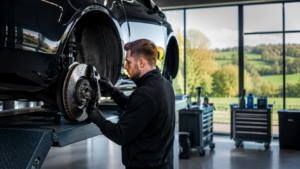
This corrosion is rarely dangerous in the way that a worn-out pad would be, but it can cause a light grinding or scraping noise, slightly reduced braking feel, and in more developed cases, uneven disc wear. A brake inspection — even on a car with plenty of pad material left — should still form part of a regular service, precisely because pad thickness alone doesn’t tell the whole story on an EV.
Should I Deliberately Use the Friction Brakes More Often?
Some manufacturers and independent technicians recommend occasionally using the friction brakes more firmly — for instance switching off or reducing the regenerative braking setting on a longer drive, or simply braking a little more conventionally now and then — specifically to keep the disc surfaces clean and prevent corrosion building up. It’s a small habit that costs nothing and can meaningfully reduce the chance of a squealing or grinding noise developing over time.
This isn’t necessary on every EV or in every driving pattern, but if your car spends long periods stationary between short trips, or you drive almost exclusively in a high-regeneration mode, it’s a sensible habit to build in.
What Should I Actually Get Checked on My EV’s Brakes?
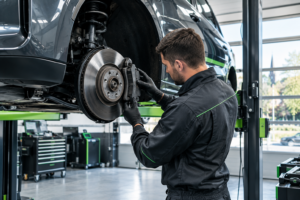
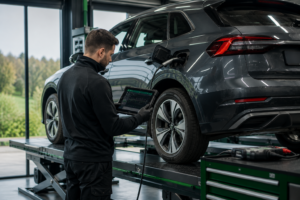
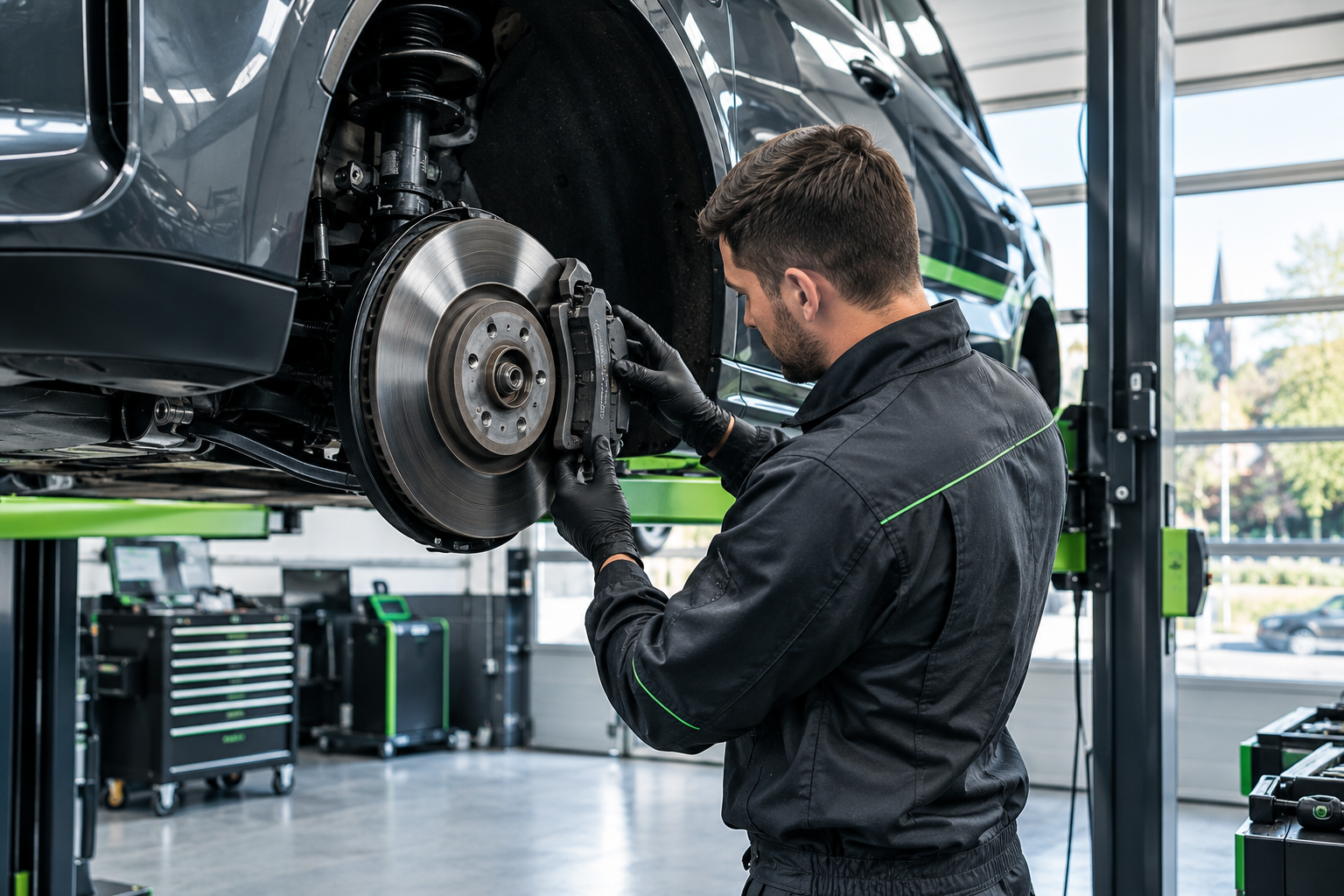
A proper EV brake check should look at pad and disc thickness as normal, but also specifically assess disc surface condition for corrosion, check that the parking brake (often electronic on EVs) is functioning correctly, and confirm brake fluid condition, since fluid still needs periodic replacement on an EV even though the friction brakes see less use. Fluid absorbs moisture over time regardless of how often the brakes are physically used, so this isn’t a component that benefits from reduced mileage.
Are There Any Downsides to How Little the Brakes Are Used?
The main practical downside is the corrosion issue already covered, and the fact that a technician can’t rely on pad wear alone as an indicator of when a brake service is due — a visual and measured inspection matters more on an EV than on a petrol car where mileage-based estimates are more reliable. Otherwise, less brake wear is a genuine, straightforward benefit of EV ownership with very little trade-off.
Frequently Asked Questions
How much longer do EV brake pads last compared to petrol cars?
Many EV and hybrid drivers report brake pads lasting well beyond 60,000–80,000 miles, compared to a more typical 30,000–40,000 mile range on a petrol car. The exact figure depends on driving style and how much the regenerative braking system is used.
Why does regenerative braking reduce brake pad wear?
Regenerative braking uses the electric motor to slow the car and recover energy into the battery, handling most everyday deceleration. This means the friction brake pads are only used heavily during firmer braking, so they wear far more slowly than on a conventional car.
Can EV brake discs still rust or corrode?
Yes. Because the friction brakes are used less often, disc surfaces can develop light corrosion, particularly on the rear brakes and on cars that do a lot of short journeys. This is a known EV maintenance quirk rather than a sign of a fault.
Do EVs still need regular brake fluid changes?
Yes. Brake fluid absorbs moisture over time regardless of how much the friction brakes are physically used, so it still needs periodic replacement on the same schedule as a petrol or diesel car, even though pad wear is much lower.
Should I use my EV’s friction brakes more often on purpose?
Some drivers benefit from occasionally braking more firmly or reducing the regenerative setting on longer drives, specifically to keep disc surfaces clean and prevent corrosion. It’s a useful habit if your car does a lot of short trips or high-regeneration driving.
How can I tell if my EV’s brakes need attention if pad wear isn’t a reliable guide?
A proper inspection checks disc surface condition, pad thickness, parking brake function, and fluid condition together, rather than relying on pad wear or mileage alone. This gives a more accurate picture than assumptions carried over from petrol car servicing.
Book an EV Brake Check
Even with far lower pad wear, EV and hybrid brakes still need a proper inspection to catch corrosion and confirm fluid condition. The team at CSG Automotive in Macclesfield can give your EV’s brakes a full check, tailored to how differently they wear.