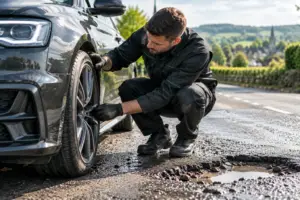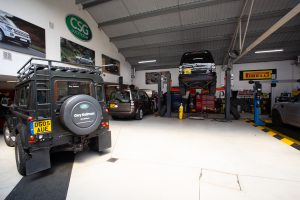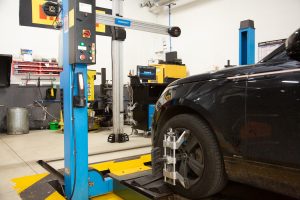
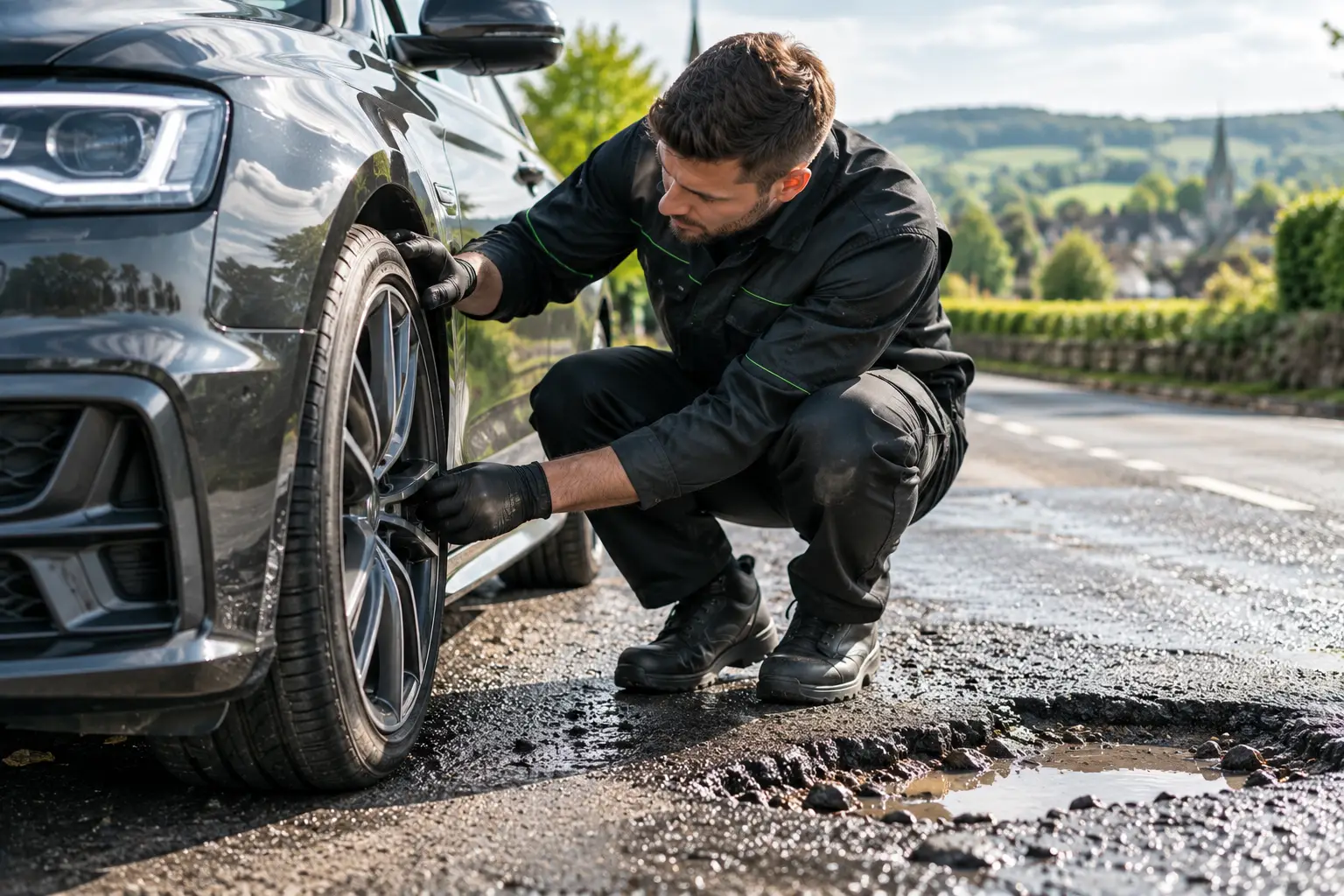
If you’ve hit a pothole on a Cheshire road recently and felt a jolt through the steering wheel that didn’t feel quite right, you’re far from alone — pothole-related repair bookings at our Macclesfield workshop have been climbing, and there’s a clear pattern behind it.
Pothole damage claims are rising across Cheshire because a combination of ageing road surfaces, repeated freeze-thaw winter cycles, and heavier traffic volumes is accelerating road deterioration faster than resurfacing budgets can keep pace with.
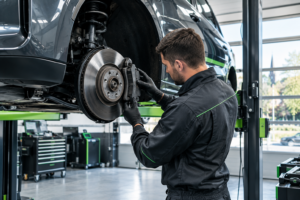
The most common resulting damage to vehicles includes bent alloy wheels, damaged tyres, disturbed wheel alignment, and in more severe impacts, suspension component damage — all of which can develop into safety issues if left unchecked.
Whether or not you plan to pursue a claim against the council, getting your car checked after a hard pothole impact matters for your own safety on the road.
Why Are Cheshire’s Roads Getting Worse?
Road surfaces deteriorate through a predictable cycle: water gets into small cracks in the tarmac, and when temperatures drop below freezing, that water expands, widening the crack from within. Repeated freeze-thaw cycles through a Cheshire winter can turn a minor surface crack into a full pothole within weeks, particularly on routes carrying heavier traffic where the constant weight of passing vehicles accelerates the breakdown further.
Council road maintenance budgets have to stretch across an enormous local network, and resurfacing work is typically prioritised by severity and traffic volume, which means minor roads and residential streets can wait considerably longer for repair than main routes — often long enough for a small pothole to become a genuinely damaging one.
What Damage Can a Pothole Actually Cause?
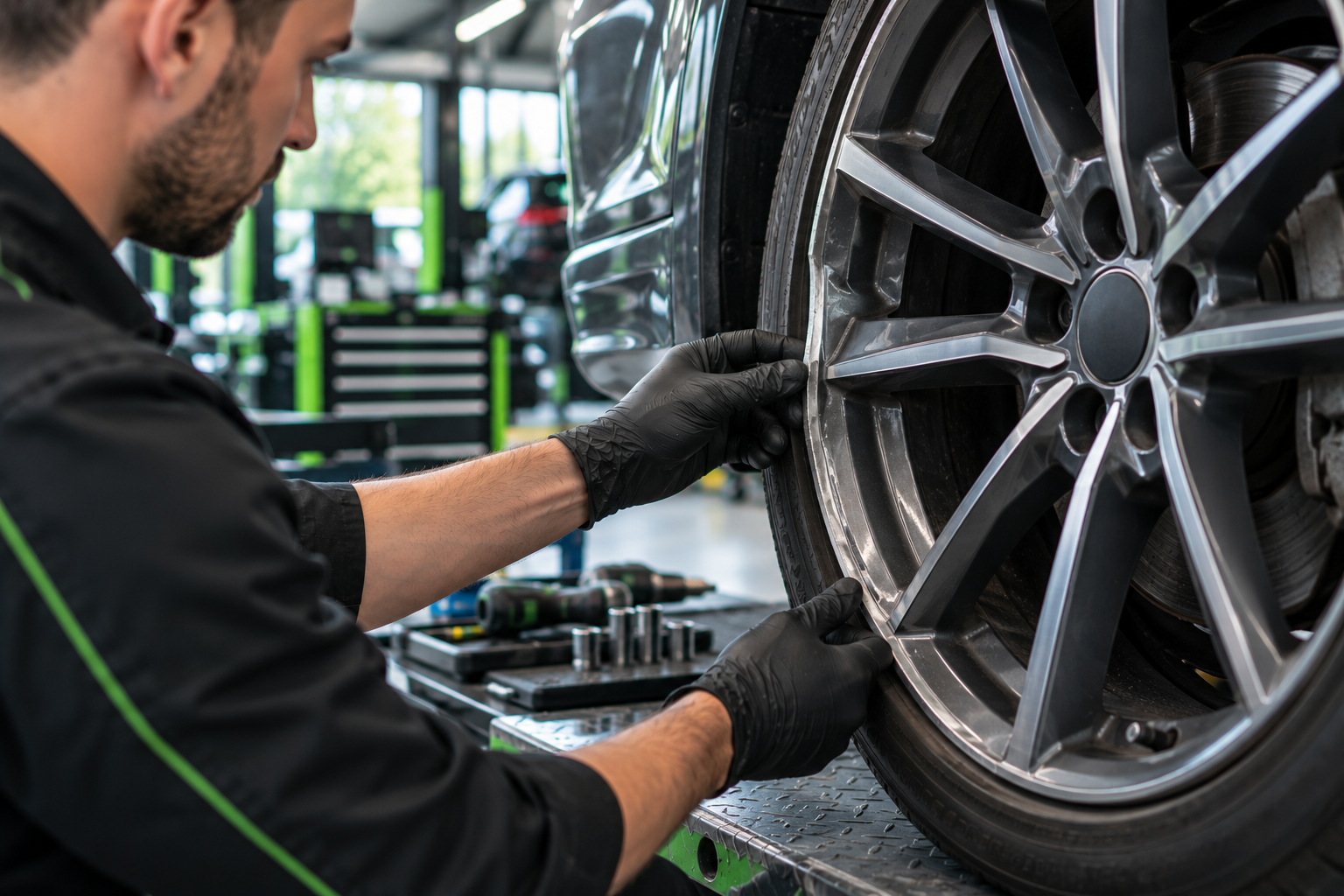
The most visible damage is usually to the wheel itself — a hard impact can bend or crack an alloy wheel, sometimes visibly, sometimes only detectable as a slight vibration at speed. Tyres can suffer sidewall bulges or splits from the sudden impact, which are a genuine safety concern since a damaged sidewall can fail without warning, unlike a slow puncture from a nail.
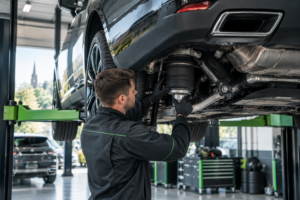
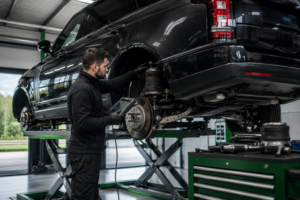
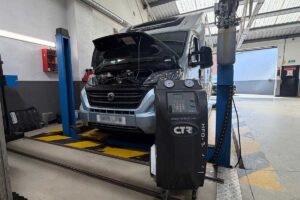
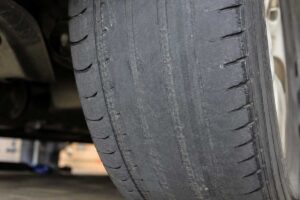
Wheel alignment (tracking) is commonly knocked out by a hard pothole strike, even when there’s no visible damage to the wheel or tyre — this shows up as the car pulling slightly to one side or uneven tyre wear developing over the following weeks. In more severe impacts, suspension components such as track rod ends, anti-roll bar links, or even a shock absorber can be damaged, which is where a check really matters, since these affect how the car handles and stops.
How Do I Know If My Car Needs Checking After a Pothole Impact?
Some symptoms are obvious immediately — a loud bang, a flat or rapidly deflating tyre, or a visibly bent wheel rim. Others are more subtle and can take days to become noticeable: a slight vibration through the steering wheel at motorway speeds, the car pulling gently to one side, a knocking noise over bumps that wasn’t there before, or the steering feeling slightly different than usual.
Any hard impact worth remembering — one you felt through the seat, not just heard — is worth having checked, even if nothing feels obviously wrong immediately afterwards. Alignment and suspension damage in particular don’t always announce themselves straight away.
Can I Claim Compensation for Pothole Damage?
Yes, in principle. Local councils, including Cheshire East and Cheshire West and Chester, have processes for pothole damage claims, and if a pothole met certain criteria for depth and had either been reported previously or existed long enough that the council should reasonably have known about it, a claim can succeed. That said, claims are assessed individually and success isn’t guaranteed — councils can and do reject claims where they can show the road was inspected and maintained to a reasonable standard.
What Evidence Do I Need for a Pothole Claim?
Photographs of the pothole itself, ideally with something for scale (a coin or ruler works well), taken as soon as possible after the incident and before the council has a chance to repair it. Note the exact location, date, and time of the impact. Keep a full written repair quote or invoice from a garage — not just a rough estimate — since councils generally want an itemised breakdown of what was damaged and what it cost to fix. A dated repair invoice from CSG Automotive detailing the specific damage caused by a pothole strike is exactly the kind of documentation that supports a claim.
Should I Get My Car Checked Even If I’m Not Planning to Claim?
Yes — this is worth separating from the claims question entirely. A pothole impact that’s knocked your wheel alignment out or caused hidden suspension wear affects how your car handles and how evenly your tyres wear, regardless of whether you pursue compensation. Left unchecked, uneven tyre wear from poor alignment can mean replacing tyres considerably earlier than necessary, and undiagnosed suspension damage is a genuine safety consideration.
What Should I Do Immediately After Hitting a Pothole?
If you felt a significant jolt, pull over safely when you can and do a quick visual check for an obviously bent wheel, a bulging or deflating tyre, or any fluid leaking underneath the car. Note the location for reporting purposes, whether or not you plan to claim. Book the car in for a proper check — alignment and a visual suspension inspection at minimum — even if everything seems fine, since some damage genuinely doesn’t show up until it’s been driven on for a while.
Frequently Asked Questions
What are the signs my car has pothole damage?
Common signs include a vibration through the steering wheel at speed, the car pulling to one side, a knocking noise over bumps, a visibly bent wheel, or a tyre with a sidewall bulge. Some damage, particularly to wheel alignment, doesn’t show up immediately.
Can hitting a pothole damage my wheel alignment?
Yes, a hard pothole impact commonly knocks wheel alignment out of specification even without visible damage to the wheel or tyre. This typically shows up as the car pulling slightly to one side or uneven tyre wear developing over subsequent weeks.
How do I make a pothole damage claim against the council?
Report the pothole to the relevant council, gather photographic evidence of the pothole with something for scale, and obtain a detailed, itemised repair quote or invoice from a garage. Claims are assessed individually and success depends on whether the council should reasonably have known about the pothole.
Is it worth getting my car checked if I don’t plan to claim compensation?
Yes. Pothole impacts can cause alignment or hidden suspension damage that affects handling and tyre wear regardless of any claim. Left unchecked, this can lead to premature tyre replacement or ongoing safety issues.
What kind of suspension damage can a pothole cause?
Severe pothole impacts can damage track rod ends, anti-roll bar links, or shock absorbers, all of which affect handling and braking performance. These aren’t always visible on a quick inspection and may need a proper suspension check to identify.
How soon after a pothole impact should I get my car checked?
As soon as practical, especially if you felt a significant jolt. Some damage, particularly to alignment, doesn’t cause obvious symptoms immediately but can lead to uneven tyre wear or handling issues if left unaddressed.
Book a Post-Pothole Check
If you’ve hit a pothole on a Cheshire road recently, the team at CSG Automotive in Macclesfield can check your alignment, suspension, and wheels — and provide the detailed repair documentation you’d need for a council claim. https://csgautomotive.co.uk/