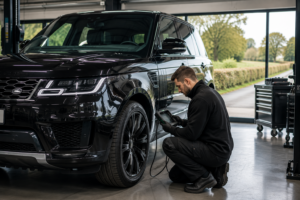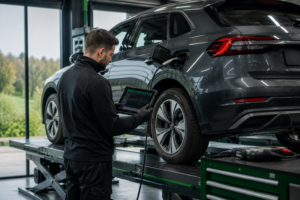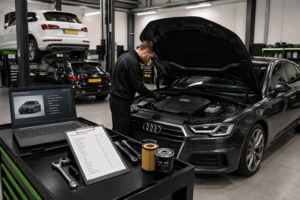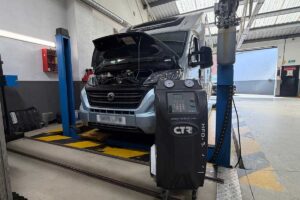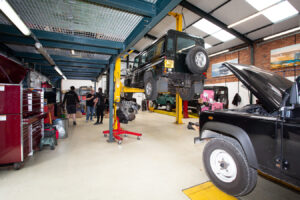

If you are thinking about switching to an electric car, the running costs are one of the first things you will want to pin down. Fuel savings get most of the attention, but what about the garage bill?
Is EV servicing cheaper than petrol or diesel servicing? Usually, yes. Electric cars have no engine oil, spark plugs, exhaust or timing belt to maintain, so routine servicing tends to be simpler and cheaper. But EVs still need brakes, tyres, suspension, coolant and battery checks, so the saving is real but not total.
Here is where the savings come from, where they do not, and what to watch for as winter arrives.
Why EV servicing is usually cheaper
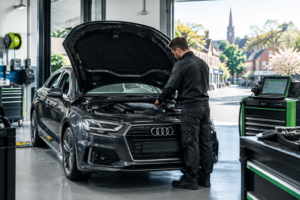
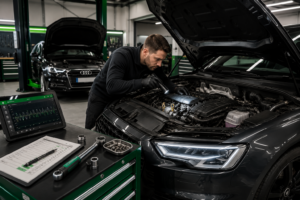
A petrol or diesel engine is a complicated machine. Hundreds of moving parts rub, burn fuel, heat up and wear out, and a good deal of servicing exists to keep that process healthy. An electric motor is far simpler, and that is the heart of the saving.
When we service a conventional car, a large part of the job is the engine itself:
- Changing engine oil and the oil filter
- Replacing spark plugs on petrol cars
- Replacing fuel filters, particularly on diesels
- Checking or replacing the air filter
- Inspecting the exhaust system
- Replacing a timing belt or checking a timing chain, depending on the engine
An electric car has none of these. There is no engine oil to drain, no exhaust to rust through, and no gearbox in the traditional sense. Fewer parts to inspect and replace usually means a shorter job and a smaller bill.
Fewer wearing parts means fewer surprises
Fewer moving parts also means fewer things to go wrong between services. Clutch replacements, exhaust repairs, failed oil pumps and blocked particulate filters are all costs that petrol and diesel owners can face, and EV owners generally do not.
That said, “fewer” is not “none”. Which brings us to the part many people overlook.
What do electric cars still need servicing?
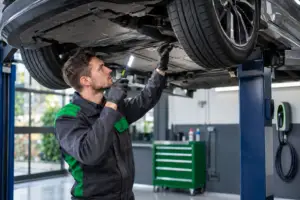
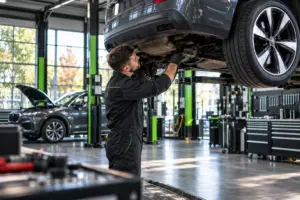
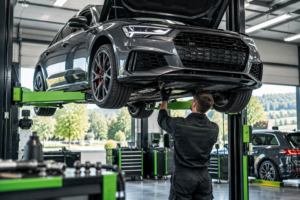
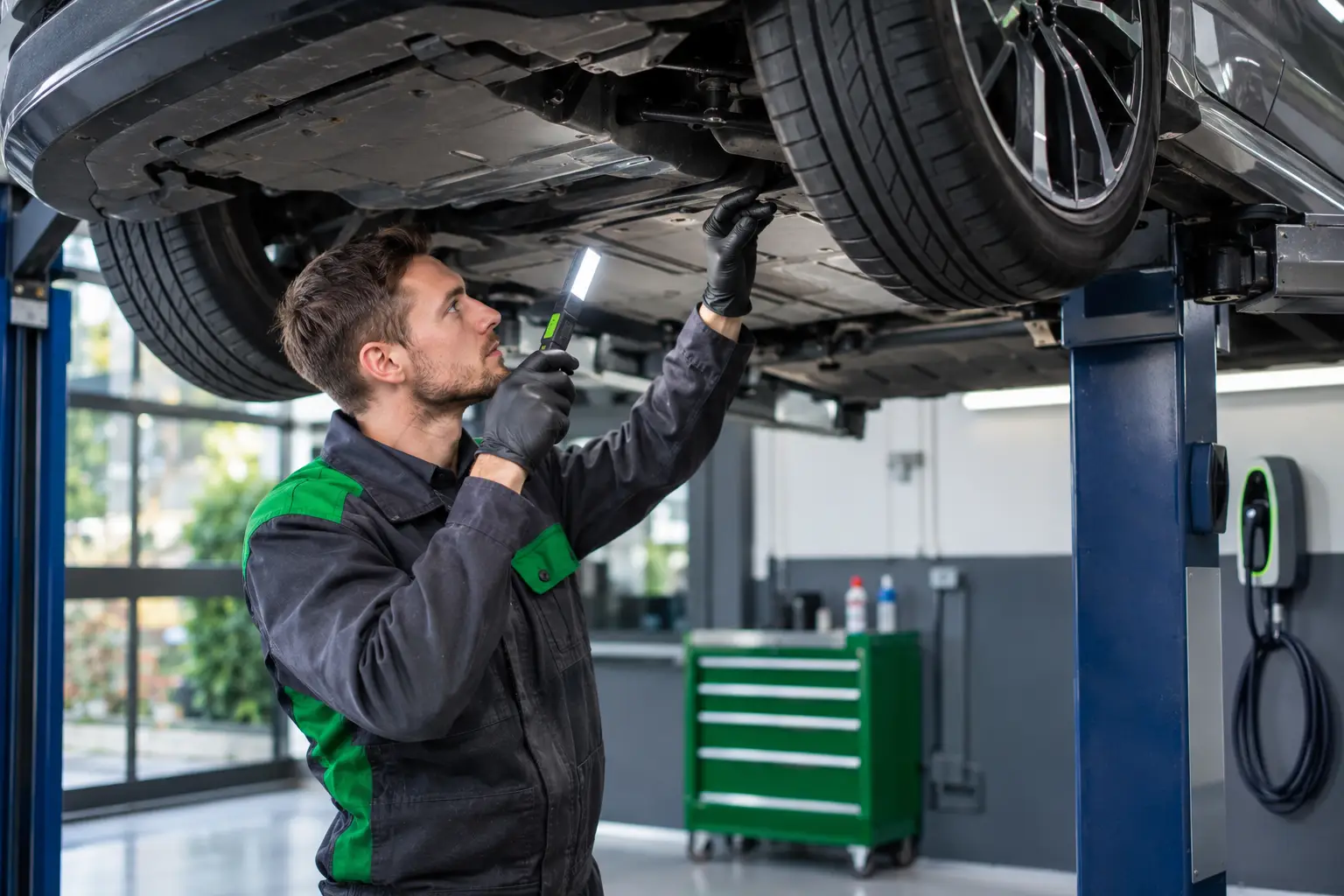
An EV is still a heavy car that drives on tyres, stops on brakes and rides on suspension. Those parts wear whatever sits under the bonnet, and a proper EV service still covers a lot of ground.
Brakes
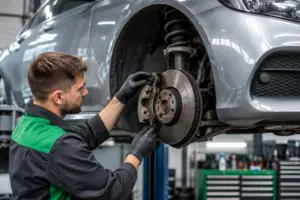
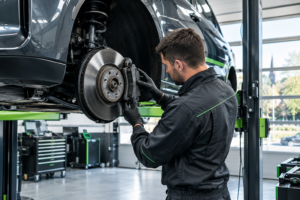
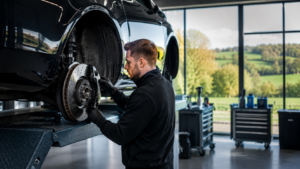
Most electric cars use regenerative braking, which slows the car by feeding energy back into the battery. This takes a lot of the load off the brake pads and discs, so they often last longer than on a petrol or diesel car.
The catch is that brakes used lightly can seize or corrode. Discs can rust and calipers can stick, especially if the car does mostly gentle town driving. Brake fluid also absorbs moisture over time and needs replacing at the intervals the manufacturer recommends, regardless of how many miles the car has covered.
Tyres
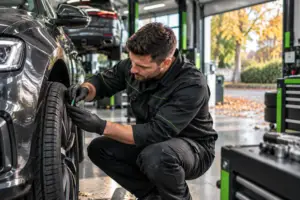
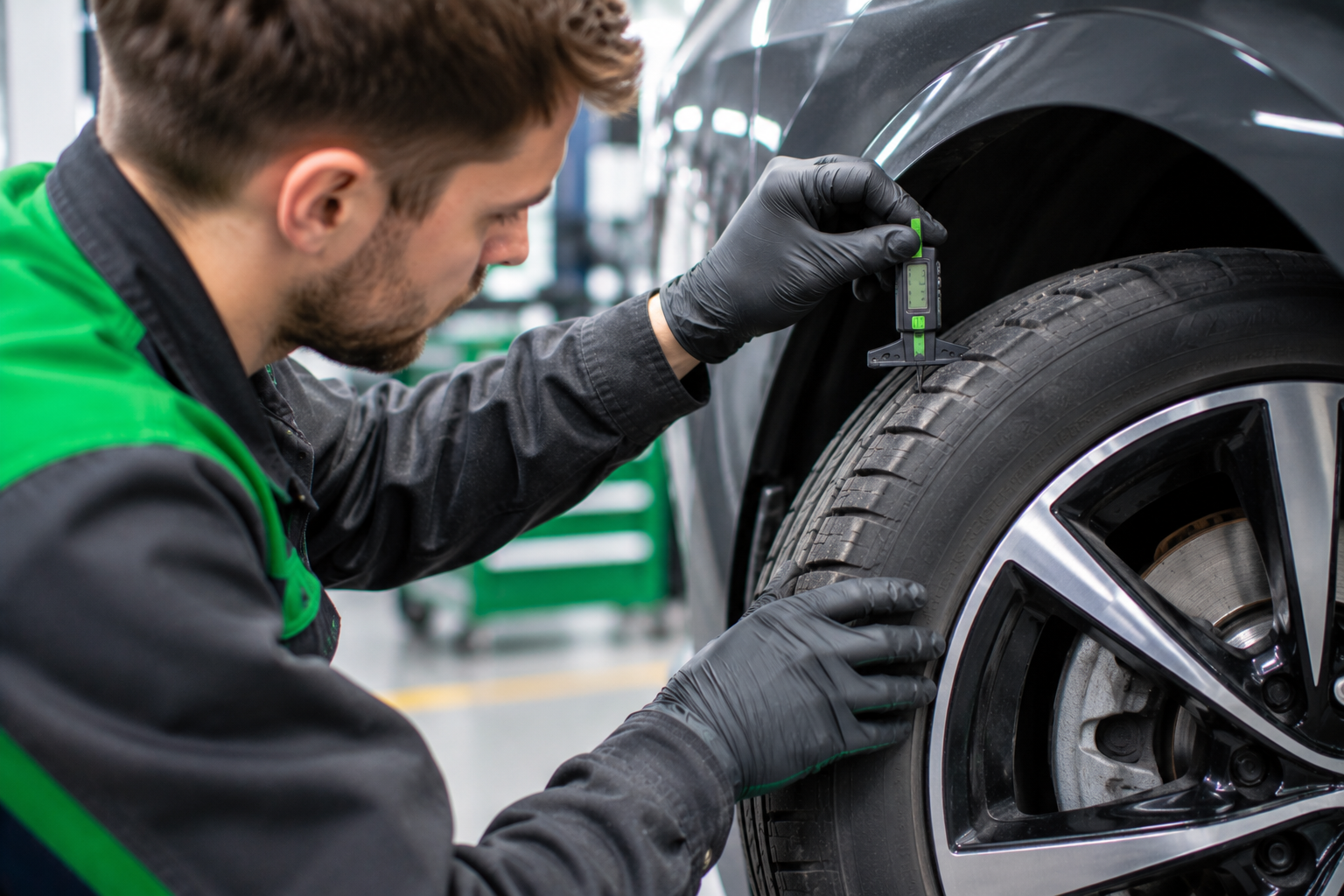
Tyres are a bigger cost on many EVs than owners expect. Electric cars are heavy because of their batteries, and instant torque can wear tread faster, particularly on front-wheel-drive or rear-wheel-drive models driven enthusiastically. Many EVs also run on larger wheels and specific low-rolling-resistance tyres, which are not always the cheapest to replace.
Regular pressure checks, rotation where the manufacturer recommends it, and wheel alignment checks all make a real difference to how long a set lasts.
Suspension and steering
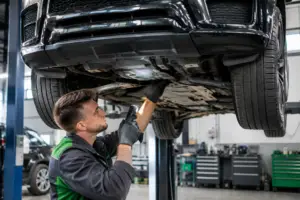
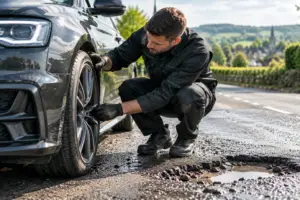
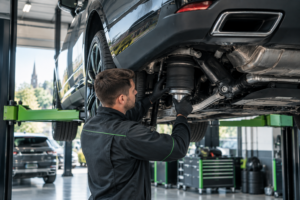
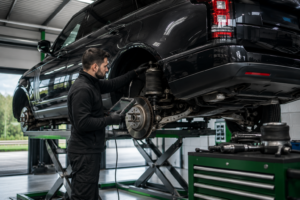
The extra weight puts more strain on shocks, springs, bushes and track rod ends. Cheshire’s mix of country lanes, potholes and speed humps does not help. A service should include a proper look at all of these.
Cabin air filter, wipers and fluids
These are the ordinary jobs every car needs. The cabin filter, wiper blades, screenwash and washer jets are checked on an EV just as they would be on any other car.
Coolant and thermal systems
Many people assume EVs do not have coolant. They do. The battery, motor and power electronics are temperature-managed, usually with a liquid cooling circuit. The manufacturer will specify when this coolant should be checked or replaced, and the interval varies a lot between models.
Is EV servicing really cheaper in practice?
For most drivers, the routine annual service is where EVs come out ahead. With no oil change, fewer filters and less to inspect, the labour and parts content of a basic service is typically lower.
But a fair comparison looks at the whole picture, not just one invoice. A few things can shift the balance:
- Specialist equipment and training. Working on high-voltage systems needs specific training and safe working procedures. That expertise has a cost, and it is not something a garage should attempt without it.
- Tyre wear. If you replace tyres more often than you did on your old car, that can eat into your servicing savings.
- Parts pricing. Some EV-specific parts can be pricey, particularly if they are only available from the manufacturer.
- Age and mileage. An older EV out of warranty may need work that a younger one does not.
Overall, owners usually find that routine running costs come down, but we would not promise a particular figure without looking at the specific car. If anyone gives you an exact saving without knowing the make, model and how you drive, treat it with caution.
What about hybrids?
Hybrids sit in the middle, and here the answer is less clear-cut.
A full hybrid or plug-in hybrid still has a petrol or diesel engine, so it still needs oil changes, filters and the rest of the conventional servicing list. On top of that, it has a battery, an electric motor and extra systems to check.
That means hybrid servicing can end up costing about the same as a conventional car, and occasionally a little more. The upside is that regenerative braking often reduces brake wear, and the engine may run less than it would in a petrol-only car, which can reduce wear on some components.
If you are choosing between a hybrid and a pure EV partly on servicing costs, the pure EV usually has the edge on simplicity. A hybrid gives you flexibility on range but brings two systems to maintain.
Do EVs have to be serviced at a main dealer?
No. This is one of the most common misunderstandings. In the UK, you are generally free to have your car serviced at an independent garage without automatically voiding the manufacturer’s warranty, provided the work is done to the manufacturer’s specification using suitable parts.
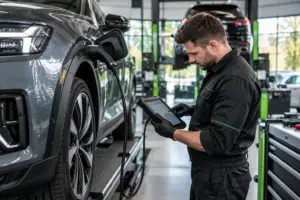
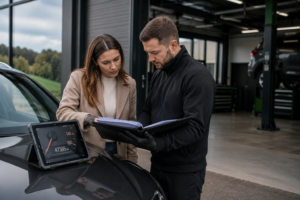
What matters is that the garage has the right equipment, the right training for working on high-voltage systems, and access to the correct service information for your car. It is perfectly reasonable to ask a garage about this before you book.
An independent garage can also be more flexible and more personal than a dealer. You deal with the people who actually look at your car, and you can ask them straight questions about what really needs doing and what can wait.
How to keep EV servicing costs down
Whatever you drive, the same principle applies: small, regular attention is cheaper than big, late repairs. For an EV, a few habits help.
- Follow the manufacturer’s service schedule. Intervals vary, and skipping them can affect warranty and resale value.
- Check tyre pressures monthly. Correct pressures protect range and tyre life.
- Use the brakes properly now and then. A firm stop occasionally helps keep discs and pads clean and moving freely.
- Look at the battery health report if your car provides one. Ask your garage to check the battery state of health during a service.
- Keep software updated. Some manufacturers fix issues and improve efficiency through updates.
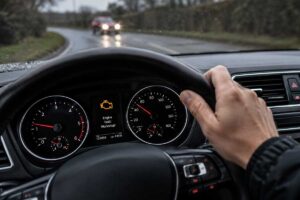
- Take warning lights seriously. A dashboard warning on an EV should not be ignored, and high-voltage faults are not something to try to fix yourself.
Winter and EV servicing in Cheshire
Now that the clocks have gone back and the nights are drawing in, it is a good moment to give your car some attention, whatever it runs on.
Cold weather reduces battery range on an electric car, because the battery is less efficient and the heater draws power. A car that is already struggling with tyres, brakes or 12-volt battery health will feel it more in winter.
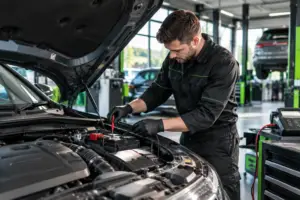
The small 12-volt battery is worth a mention. Even on an EV, a weak 12-volt battery can cause warning lights, failure to start and odd behaviour in the electronics. It is a surprisingly common reason for an electric car to refuse to wake up on a frosty morning.
Winter is also hard on tyres, brake discs and suspension because of wet roads, salt and potholes. A pre-winter check is sensible for any car, and for an EV it is a chance to look at the things that matter most: tyres, brakes, coolant, wipers, lights and the 12-volt battery.
Frequently asked questions
Is EV servicing cheaper than petrol or diesel servicing?
In most cases, yes. Electric cars have no engine oil, spark plugs, exhaust system or timing belt, so routine servicing is usually simpler and cheaper than for a petrol or diesel car. However, EVs still need brake, tyre, suspension, coolant and battery checks, so costs are lower rather than zero.
How often should an electric car be serviced?
It depends on the manufacturer, but many recommend a service roughly once a year or at a set mileage, whichever comes first. Always check your car’s service schedule or handbook, as intervals for items such as brake fluid and coolant differ between makes and models.
Do electric cars need an MOT?
Yes. Electric cars are subject to the same MOT rules as petrol and diesel cars once they reach the age at which a first MOT is due. The test covers brakes, tyres, lights, steering, suspension and other safety items, and it is separate from a service.
Can an independent garage service my electric car without affecting the warranty?
Generally, yes. In the UK you can usually have your car serviced at an independent garage without voiding the warranty, as long as the work follows the manufacturer’s specification and uses suitable parts. Make sure the garage has the right equipment and training for high-voltage systems before you book.
Are hybrids cheaper to service than petrol or diesel cars?
Not always. A hybrid still has a combustion engine, so it needs oil changes and other conventional servicing, plus checks on the battery and electric motor. Hybrid servicing often costs about the same as a conventional car, although reduced brake wear can help over time.
Do electric car brakes and tyres wear out faster?
Brake pads often last longer on an EV thanks to regenerative braking, but discs can corrode if the brakes are used lightly. Tyres can wear faster because EVs are heavier and deliver instant torque, so regular pressure checks and alignment checks are worthwhile.
The bottom line
For most drivers, EV servicing is cheaper than servicing a petrol or diesel car, mainly because there is far less engine to maintain. The saving is not unlimited, though. Tyres, brakes, suspension, coolant, the 12-volt battery and general safety checks still need regular attention, and the work should be done by people who are properly equipped and trained.
If you are weighing up an electric or hybrid car, or you already drive one and want it looked at before winter, get in touch with the team at CSG Automotive to talk it through or book your car in. We will tell you plainly what it needs and what it does not.